Evaluating Agent Platforms by Isolation Depth Not Just API Surface
A strong sandbox isn't enough without egress, tenancy, and secrets controls.
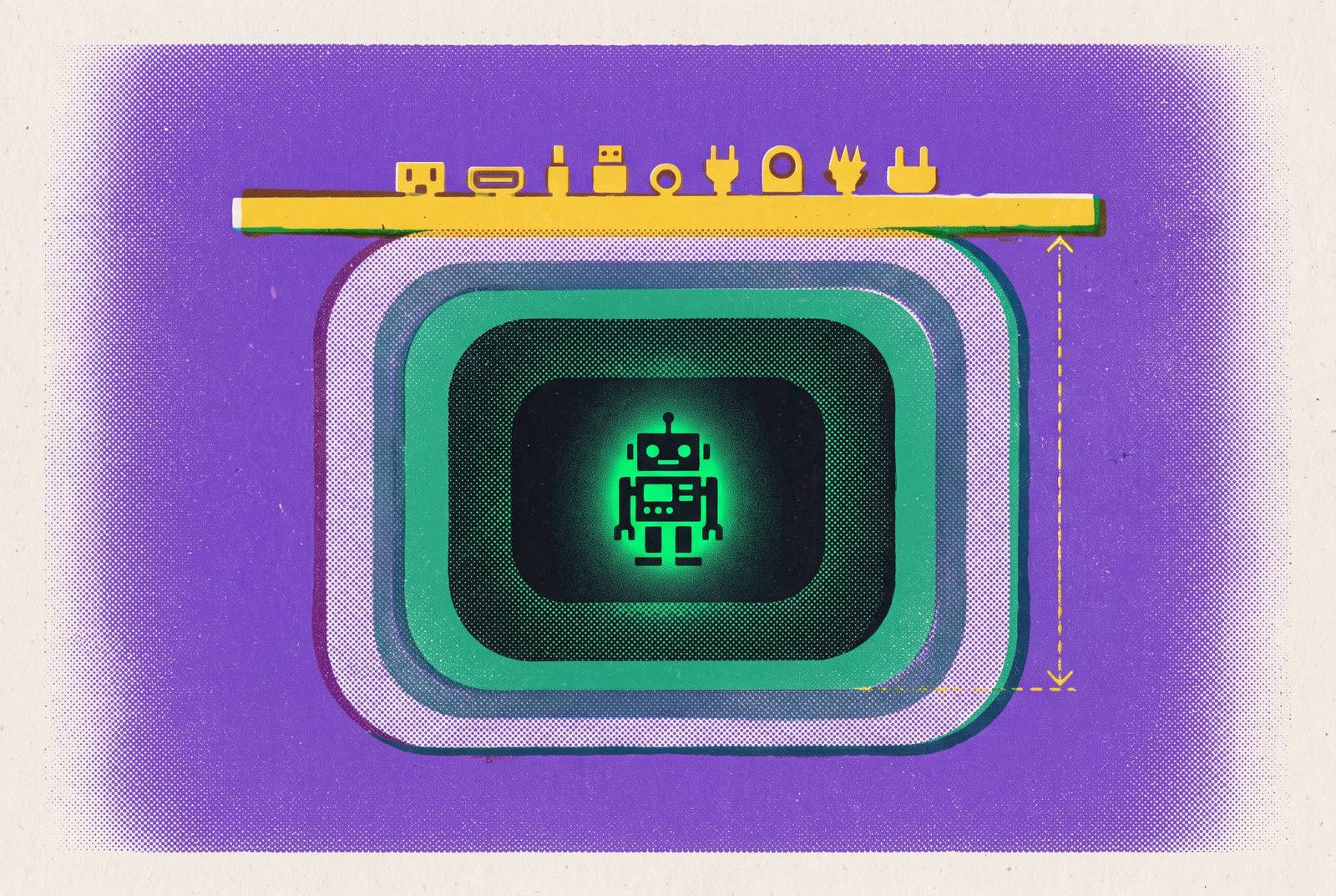
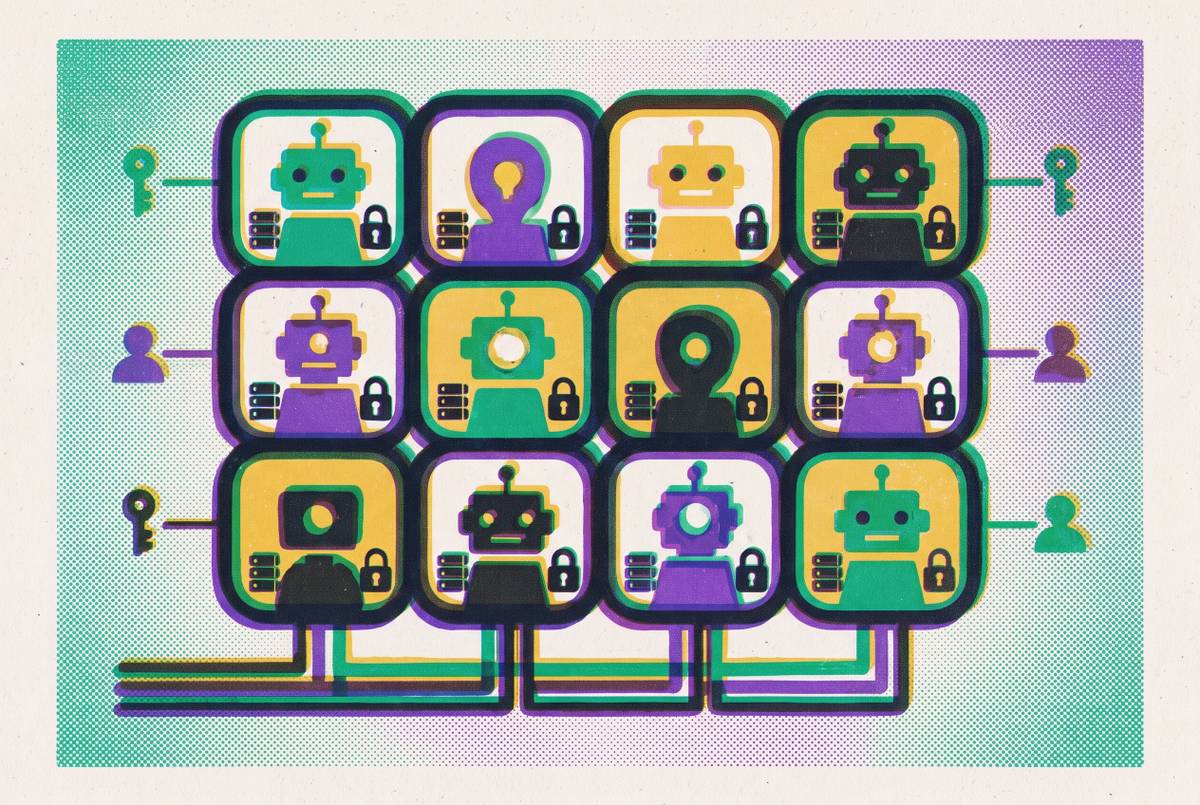
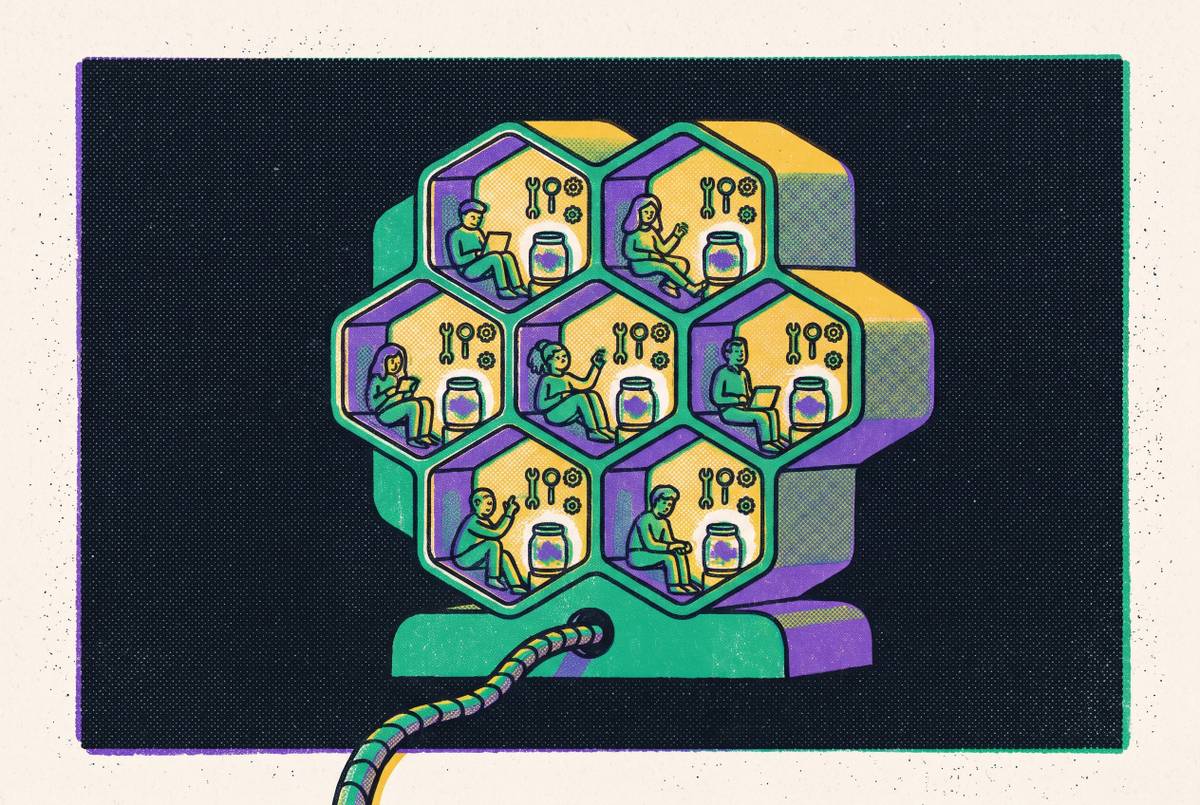
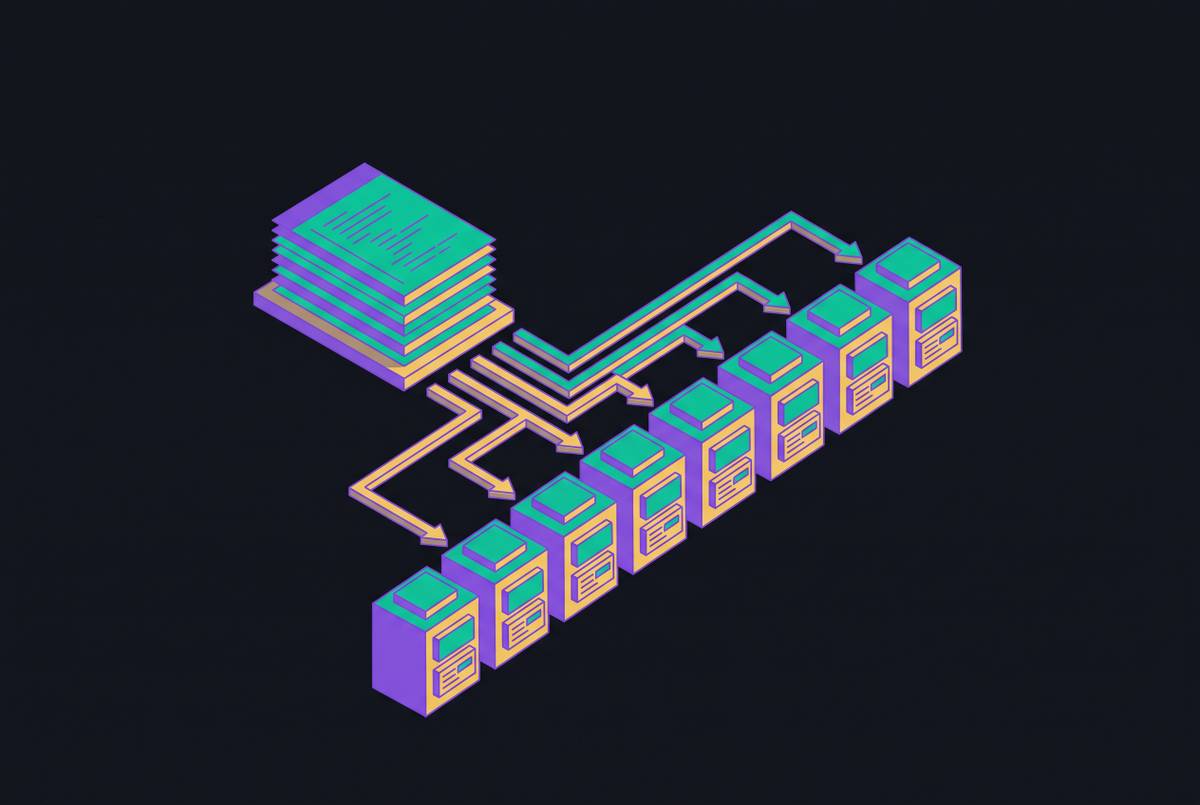
Giving each customer an isolated AI agent requires more than a sandbox provisioned through an API. The production standard is an automatically provisioned, persistent environment per customer, with a compute boundary, controlled outbound access, separate tenancy, and run-scoped credentials. A single API call simplifies setup, but it does not prove those protections exist. Agent platforms should be evaluated by isolation depth.
Why API surface became the wrong lens for evaluating agent platforms
Johann Rehberger’s ZombAIs demonstration showed an agent becoming a zombie after visiting a malicious webpage during a normal browsing task. The agent had unrestricted host access and no sandbox. The exploit chain worked on the first try and required no special access.
That failure exposes the weakness in comparing platforms by counting integrations, scanning documentation, and running demos. Those methods show what an agent can do, while production safety depends on what it cannot do. Yao et al.’s ReAct pattern in 2022 marked the architectural turn by interleaving reasoning and tool use. Code execution, filesystem writes, external API calls, and credentials therefore became both useful capabilities and possible attack paths.
A broader API can make that exposure harder to see because each new connection appears as another reason to buy. With unrestricted machine or production-network access, however, prompt injection has a path to a data breach. A successful demo does not test that path.
What "isolation" actually means across four independent boundaries
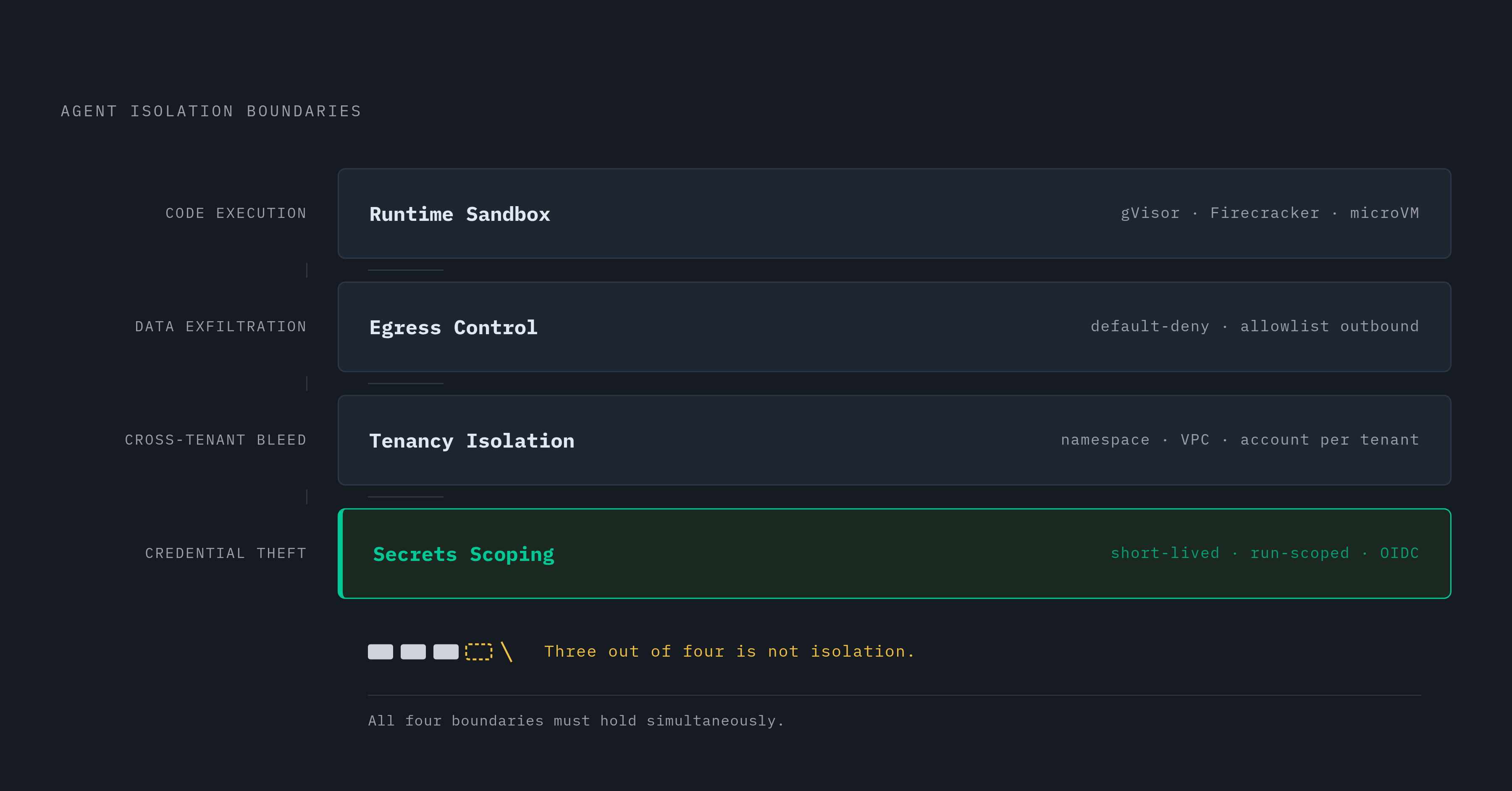
The runtime boundary constrains the code an agent can execute and the system calls it can reach. A standard container shares the host kernel, leaving escape possible through a kernel vulnerability or misconfiguration. gVisor interposes a user-space kernel, while Firecracker provides a dedicated guest kernel. These are different forms of compute protection.
Egress control governs outbound calls from that compute environment. It separates a contained process from one that can send readable data elsewhere. Tenancy governs a different kind of separation, namely whether one customer’s execution, context, or configuration can reach another’s. Kubernetes multi-tenancy guidance treats namespaces as control-plane segmentation and points to sandboxed containers for tenants that do not trust each other.
Secrets scoping sets which credentials an agent gets and how long it can use them. The standard is short-lived access scoped to one run, with OIDC-federated or projected tokens taking the place of shared, long-lived keys. The terms must stay distinct. A sandbox is the compute boundary around a run, tenancy identifies who shares a namespace, VPC, or account, and isolation requires all four protections together. Three out of four is not isolation.
Why the runtime boundary is now a minimum requirement, not a differentiator
OpenAI, Cloudflare, and Kubernetes SIG Apps introduced sandbox-related capabilities across Q1–Q2 2026, making runtime protection a baseline evaluation question. But names alone still prove very little. OpenAI shipped native sandbox execution and SandboxAgent in its Agents SDK on April 15, 2026. Its UnixLocalSandboxClient provides no OS-level confinement on Linux and only limited filesystem restrictions on macOS. Kubernetes SIG Apps announced its still-developing Agent Sandbox project in March 2026, with a Sandbox custom resource supporting gVisor or Kata Containers and pause/resume controls.
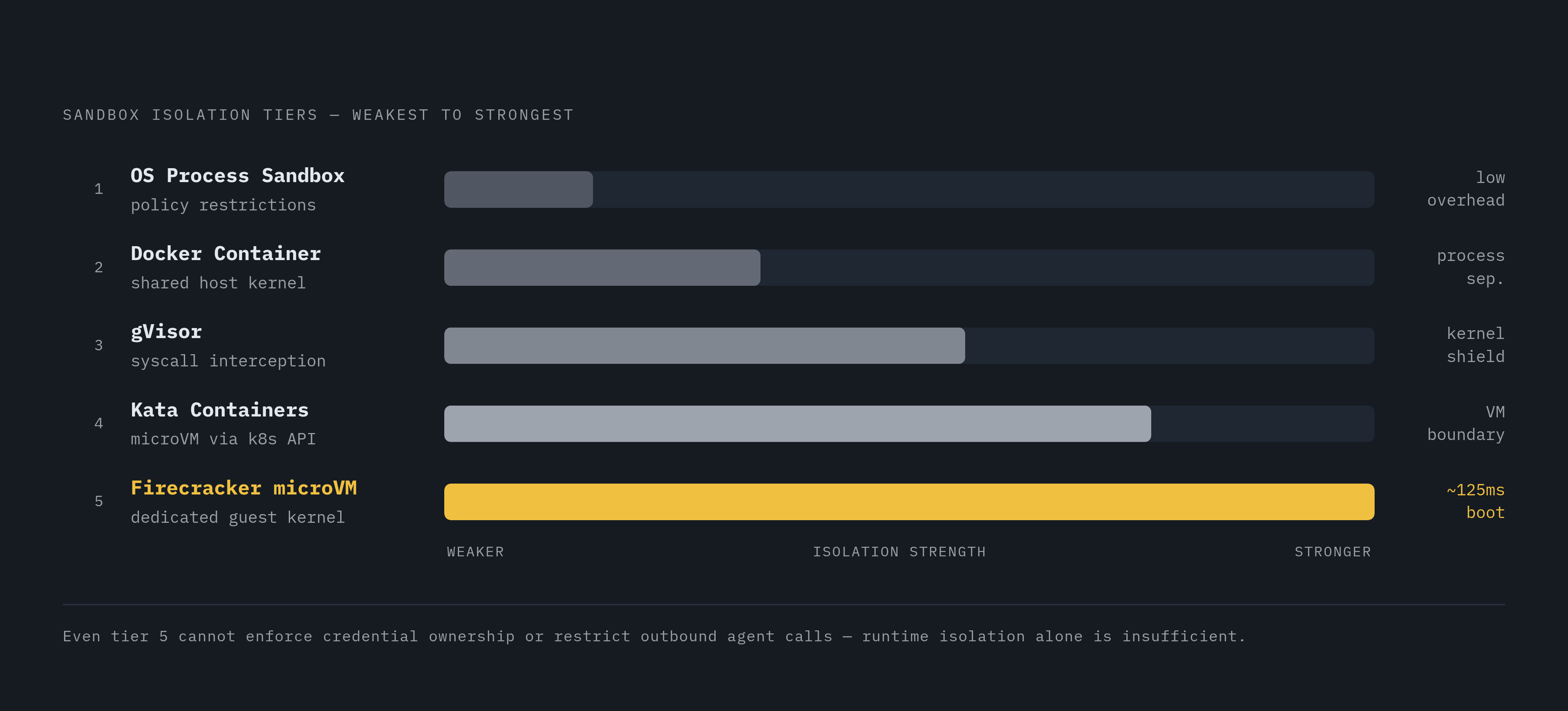
The underlying tiers cover different threats. OS process sandboxes offer low-overhead policy restrictions, while standard Docker containers provide process separation with a shared host kernel and suit trusted, single-tenant workloads. gVisor intercepts system calls before they reach that kernel. Firecracker microVMs instead provide hardware-enforced separation through dedicated guest kernels, with boots in roughly 125ms. Kata Containers brings microVM isolation through standard container APIs and Kubernetes orchestration.
The workload determines which tier is appropriate. A developer agent that can access many files and commands needs stronger general-purpose protection than a managed agent that can use only a small set of tools. But even the strongest tier cannot decide which customer owns a credential or where an agent is allowed to send an outbound call. Those decisions sit beyond the compute boundary.
Egress control as the boundary most platform evaluations miss
An agent with access to data and permission to send it somewhere can leak that data from within its sandbox. Integrations, webhooks, and external API calls are listed as benefits, but the documentation for them often says little about what is blocked by default.
Greshake et al. described the indirect prompt injection attack class in 2023. An agent comes across external content while doing a legitimate task, and when that content contains adversarial instructions, the agent follows them with the access it has. If the resulting outbound call can transmit readable data, the compute sandbox has not stopped exfiltration. It has contained execution, which is a different job.
The passing standard is default-deny egress with explicit allowlisting. Open access paired with an instruction not to leak data is not an enforced network boundary. Fly.io’s private-by-default 6PN WireGuard networking between apps in an organization is one network-layer control, though private internal networking alone does not settle every question about outbound access.
Anthropic has stated that this risk remains. Any setup that allows network egress can still leak data the agent can read through the paths it allows. Allowlisting therefore narrows exposure. A platform evaluation needs to establish both the default posture and how precisely outbound permissions can be scoped per agent or customer.
Tenancy model and secrets scoping: the two boundaries that determine whether a productized agent is safe at scale
For a product serving multiple customers, a protected session is not enough. Customer A’s context must stay out of customer B’s session. With the Claude Code SDK, this can fail without a dramatic escape. It reads settings and CLAUDE.md files from the filesystem, so running it in a shared container can let one tenant’s context enter another tenant’s session. Its hosting guide specifies five per-tenant configuration steps to prevent that gap.
The production standard is one isolated namespace, VPC, or account per customer agent, provisioned automatically at onboarding. That separation must include both configuration and execution. When a shared environment has to be adjusted by hand for each customer, tenancy depends on doing that setup work each time. A persistent customer agent also needs credentials whose lifetime is shorter than the environment’s.
Long-lived shared keys fail that test because they survive sessions and can be inherited by another tenant. Short-lived, run-scoped credentials limit that risk, while pre-action authorization controls what the agent can do with the access it has. Uchi Uchibeke’s March 2026 Open Agent Passport paper distinguishes that enforcement from model alignment and retrospective evaluation. Neither substitutes for a policy decision before a tool call executes.
The paper’s adversarial testbed makes the distinction concrete. Social engineering worked against the model in the large majority of attempts under a permissive policy, while a similar group of attackers had a zero percent success rate under a restrictive OAP policy. That result is evidence for enforced authorization within the paper’s adversarial testbed. Microsoft’s Agent Governance Toolkit, open-sourced in April 2026, further signals the maturation of this engineering layer through capability sandboxing, semantic intent classification, and MCP security gateways.
How named platforms map onto the four boundaries
Modal provides serverless containers virtualized using gVisor, a Sandboxes API for untrusted code, and GPU support. Its runtime protection does not remove builder responsibility for egress and secrets configuration. Fly.io offers Firecracker microVMs, subsecond starts, and private-by-default 6PN networking. Its tenancy model and secrets scoping remain self-wired.
Google Cloud’s GKE Sandbox combines gVisor with VPC controls and Workload Identity Federation, with Vertex AI integration. Those components cover more than compute alone. EKS with gVisor and VPC/IAM offers maximum control across all four boundaries but also maximum assembly work.
Qovery deploys environments inside the builder’s own AWS, GCP, Azure, or Scaleway account, or an existing Kubernetes cluster. It provides per-environment namespaces, RBAC, environment-scoped secrets, and ephemeral environments destroyed when tasks end. Those features address tenancy and credential separation at the platform layer. Environment-scoped secrets alone do not show that credentials are short-lived and run-scoped. Ephemeral task environments also should not be confused with persistent customer agents.
Self-hosted Claude Code requires a narrower reading of its sandbox claim. Its Seatbelt or bubblewrap protection must be explicitly enabled through /sandbox or sandbox.enabled and covers bash commands, leaving file tools, MCP servers, and hooks outside its scope. OpenAI Codex cloud instead gives each task its own container and has a setting for each environment that controls internet access. A container per task is not evidence of a persistent tenant environment.
NVIDIA NemoClaw wraps OpenClaw with enterprise controls through a CLI plugin, versioned orchestration blueprint, and OpenShell runtime using a container-orchestration gateway running in Docker. Its privacy router sends sensitive data to local Nemotron models to control where the data goes for data residency. That is evidence of a specific protection, with proof of all four boundaries still lacking. These options do not show that there is a single-call solution that keeps each customer isolated in a persistent environment in every case. The stronger architectural pattern combines a sandbox for model-written code with a platform inside the builder’s account for team-written services.
The objection that isolation depth and workload reality are in tension
Maximum runtime isolation can impose latency, cost, and compatibility tradeoffs that a narrowly scoped workload does not justify. That objection is fair and practically useful. Octopus Deploy’s July 1, 2026 engineering post argues that shared managed agents calling a small set of well-defined tools can often be secured by separating the agent harness from those tools. Narrowing what the agent can invoke may be more appropriate than maximizing sandbox strength.
Cloudflare’s Dynamic Worker Loader, opened in beta on March 24, 2026, illustrates the lightweight alternative. It provides ephemeral sandboxes inside Workers with scoped RPC bindings and low-latency startup. Moving away from traditional containers can introduce compatibility gaps, however. The right choice, including whether to use microVMs, depends on the workload.
That tradeoff applies to runtime design. Egress restrictions and credential scoping have near-zero latency cost and do not justify open outbound access or shared, long-lived credentials. Tenancy becomes non-negotiable when a product has more than one customer.
A practical evaluation checklist organized by isolation boundary
For runtime evaluation, the checklist starts with the default primitive behind the product’s use of the word sandbox. Establish whether it is a shared container, gVisor, a microVM, or a worker sandbox. Check whether the protection covers the whole harness or just some tools. Record whether it is enabled by default. These answers reveal what the agent can reach before any additional configuration.
For egress, check whether outbound access is open or denied at the start and whether the rules are set for each agent, customer, or environment. Distinguish network enforcement from instructions given to the model. For tenancy, identify the separate namespace, VPC, or account assigned to each customer and whether onboarding provisions it automatically. Then check whether another tenant can read the filesystem, context, or configuration. A separate session name is not sufficient evidence.
For secrets, check how long credentials last, which run they are scoped to, and whether OIDC federation or projected tokens are supported. Check authorization before the tool call executes. The OAP specification provides an open reference implementation for that control independently of sandbox tier. For a persistent per-user offering, also establish persistence and provisioning behavior directly rather than inferring them from a sandbox creation API.
The integration layer also needs to be checked for reliability. Composio’s documented incident involved a cleanup job silently failing because unbounded table growth caused query timeouts, leaving webhook triggers unavailable for several apps. The lesson concerns single-dependency risk. The buying rule is four boundaries, all four must hold, and API surface alone tells you none of this.