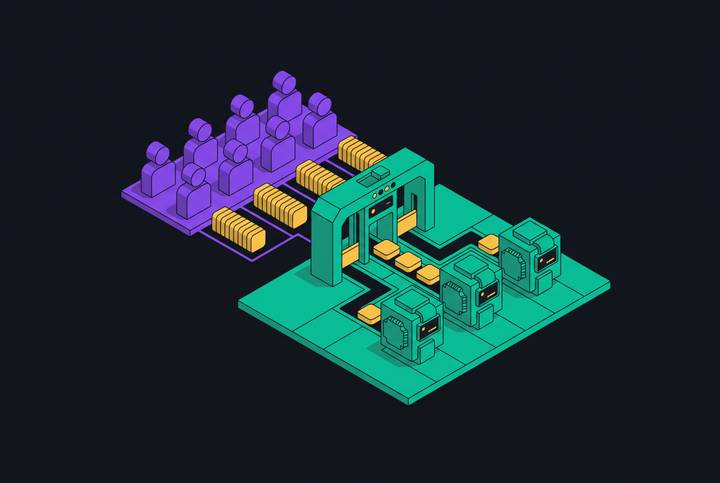
Concurrency Limits and Queue Design for Per-User Agents
Agent workloads demand isolation and queue design upfront, not rate-limit tuning after launch.
Priya SubramaniamSeptember 13, 2026
The latest in Multi-Tenant Architecture — reports, playbooks, and analysis from Agent to Product. 8 stories.
Agent workloads demand isolation and queue design upfront, not rate-limit tuning after launch.
Priya SubramaniamSeptember 13, 2026
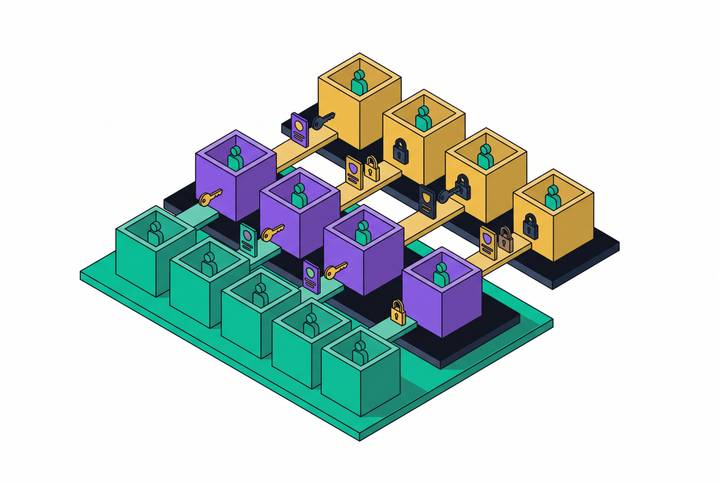
Agents force RBAC into a four-layer architecture or risk leaking data across tenants.
Terrence KwonSeptember 12, 2026
Terrence KwonSeptember 9, 2026
Scaling an agent prototype requires rearchitecting isolation, state, and credentials first.
Lieselotte BrandtSeptember 8, 2026
Silent failures in tag-based memory scoping expose multi-tenant data without alerting anyone.
Priya SubramaniamSeptember 7, 2026
Slow agent provisioning kills conversion before customers ever see the product work.
Priya SubramaniamSeptember 6, 2026
Architectural isolation beats contractual promises when data separation fails.
Priya SubramaniamSeptember 5, 2026
Preserve agent progress across crashes to avoid wasting tokens and restarting from scratch.
Terrence KwonSeptember 4, 2026
Choose sandbox isolation based on what the agent actually touches, not just speed.