Tenant Onboarding Latency in Agent SaaS Products
Slow agent provisioning kills conversion before customers ever see the product work.
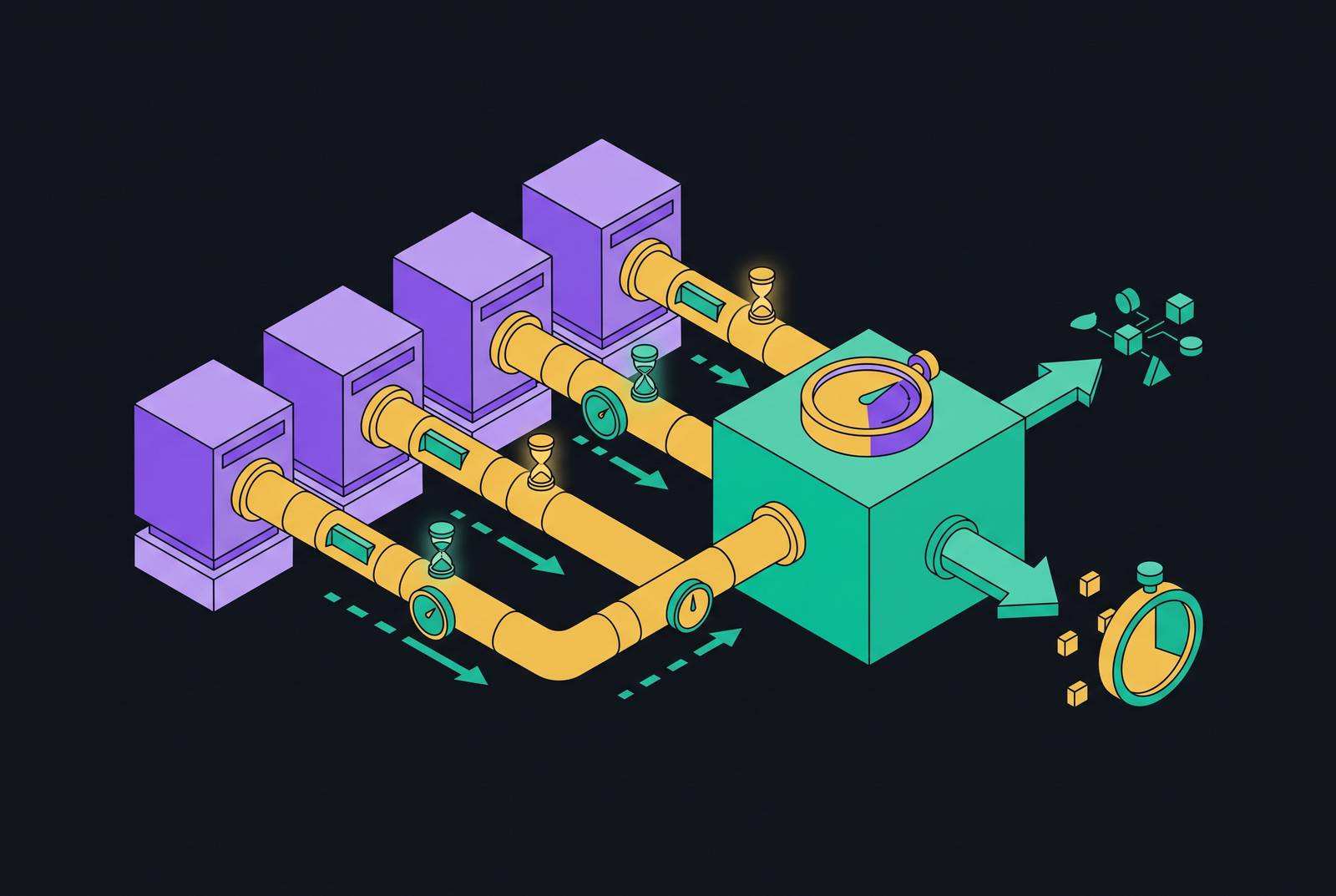
The gap between a signed contract and a working product is where agent SaaS companies actually die. Traditional software has an onboarding delay too, but it's cosmetic: a welcome email, a setup form, maybe a first login screen. Agent products fail differently. Until a dedicated, isolated agent instance is actually running, the customer has nothing to click on, nothing to test, nothing to show their boss. That gap isn't a UX rough edge; it's an architecture decision made months before the first paying customer signs up, and it's the single most consequential thing a founder building in this space will get right or wrong early.
The customer doesn't experience this as "the product is slow." They experience it as "the product is broken," and that distinction matters more than it sounds like it should. A slow product earns patience. A broken one earns a support ticket, or worse, silence followed by churn. Trial-to-paid conversion and word-of-mouth both compress in that dead interval between signup and first working session: the longer the wait, the more likely someone bails before they see anything worth telling a colleague about. The agent products market has enough new entrants right now that whichever product feels instant wins disproportionate attention. Slowness here compounds. It doesn't stay a one-time inconvenience.
What makes multi-tenant agent provisioning structurally harder than conventional SaaS multi-tenancy
In a normal SaaS app, onboarding a new tenant is mostly bookkeeping: a row in a database, a subdomain, done. The infrastructure underneath was built once and shared safely across thousands of accounts, because nobody's marketing dashboard needs to execute code on someone else's server.
Agents break that model completely. A new tenant needs an execution environment with its own process tree and its own filesystem, not just its own row. It needs credentials that can't leak sideways into another customer's data, and state that survives across sessions, since an agent that forgets everything between conversations is barely useful. It needs a network boundary that limits exactly what it can reach on the open internet, and it needs an inference path that doesn't quietly leak context from one tenant into another's response.
That last one trips people up, because it happens below the application layer, inside the model serving stack itself. Many LLM inference setups use KV-cache sharing to save compute and speed up repeated prompt patterns. That's a smart optimization, but it's also a side channel: cache sharing creates a potential side channel between tenants sharing the same inference path. That's a real factor in deciding whether to share inference infrastructure across tenants or give each one a dedicated path, not an academic footnote.
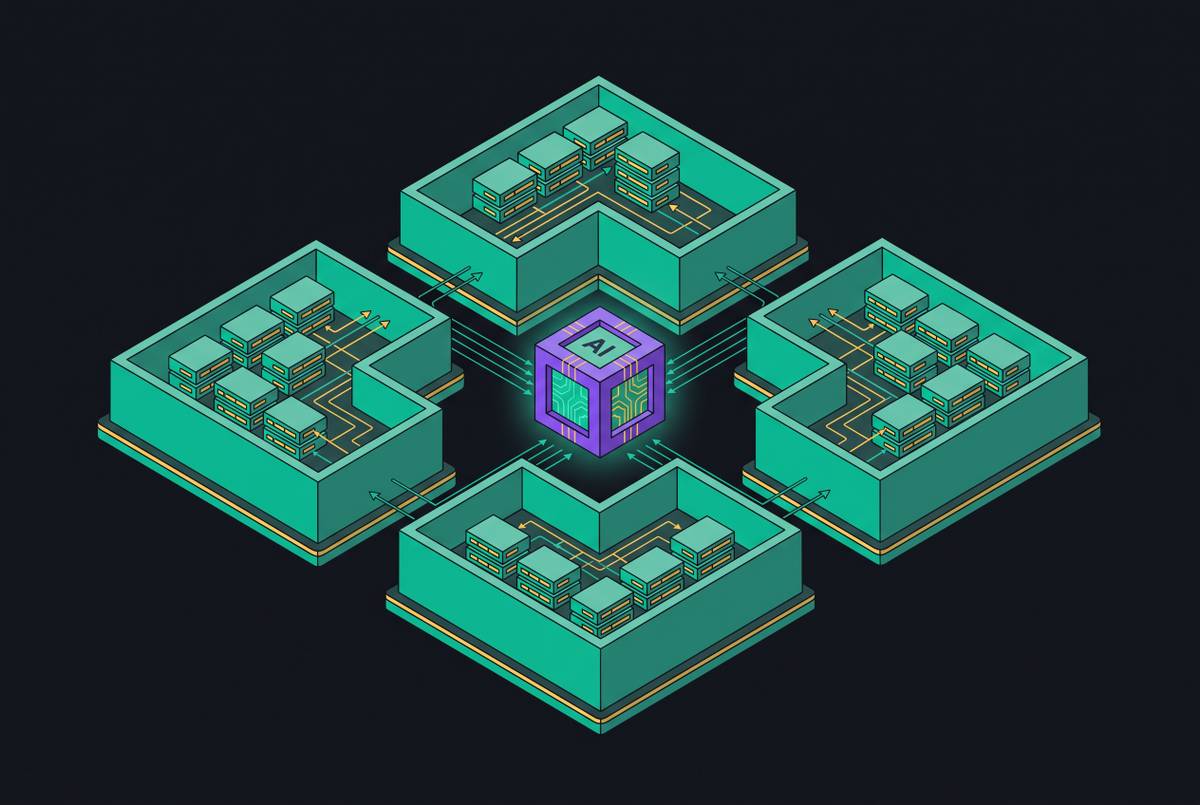
Isolation for agents spans four layers at once: data, compute, credentials, and inference. Shared containers, shared database schemas, shared inference endpoints, all of it looks fine at ten customers. Most teams treat this as a scaling problem to solve later. That's backwards. The risk is cheapest to fix before tenant one, and it only compounds as tenant count grows. By the time it's visible, it's already expensive to unwind.
The noisy-neighbor problem and why shared execution environments don't scale gracefully
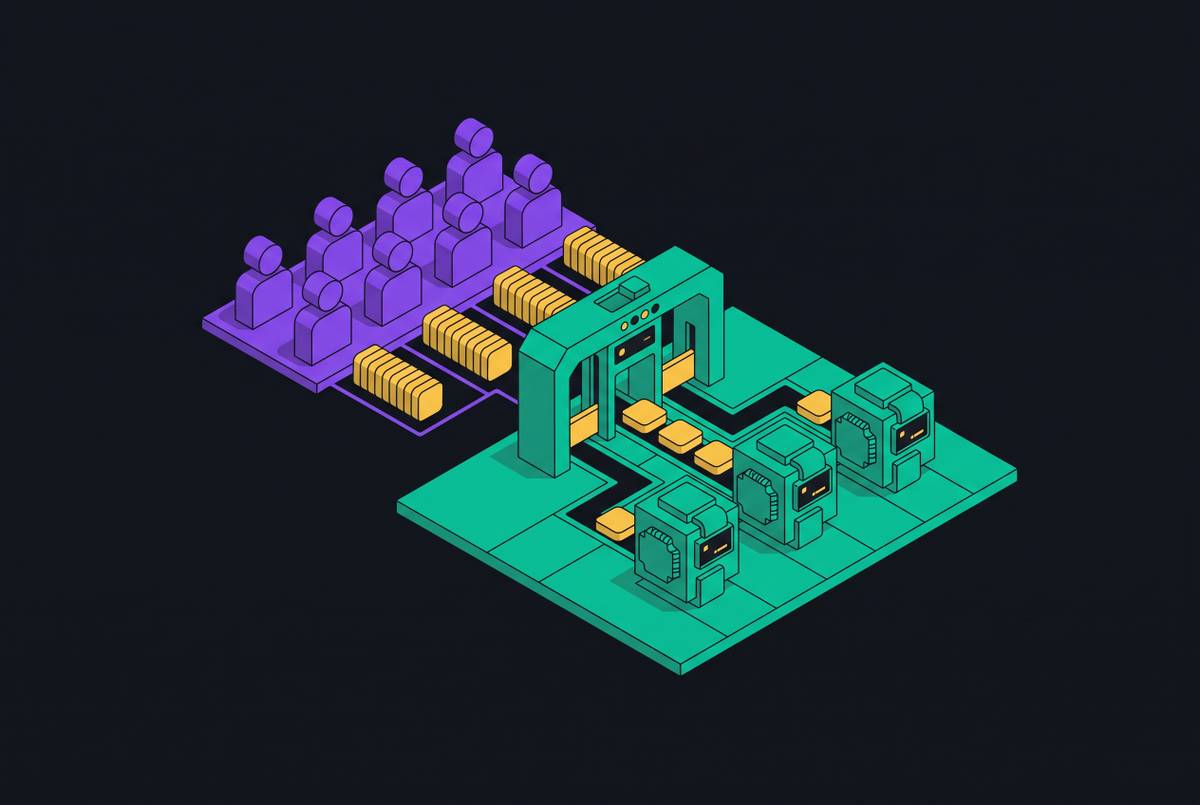
Put multiple tenants on the same box, and one runaway agent process doesn't just hurt itself. It eats CPU, memory, and disk I/O that every other tenant on that machine was quietly counting on.
This isn't rare, and it gets worse as agent tasks get longer and heavier. An agent running a multi-step research task, executing tests, or writing a batch of files can briefly max out a shared box in ways a normal web request never would. A web app serving a page doesn't spike CPU for ninety seconds straight. An agent chewing through a coding task might.
The nasty part is that the affected tenant sees none of this. Their agent just slows down or times out, and there's no signal anywhere that the actual cause is someone else's job running two containers over. From the customer's side, the product looks unreliable, full stop.
There's a trust cost buried in here too. Agents doing risky things, exposing data they shouldn't, reaching systems they weren't meant to touch, isn't a fringe case. A large share of organizations running agents at scale already report having seen this kind of behavior. In a shared environment, one tenant's mistake becomes every co-located tenant's incident. A B2B customer whose agent randomly degrades because someone else is hammering the shared box that week is not going to renew, and no amount of apologetic Slack messages fixes that.
Rate limits reduce the symptom without touching the cause. Same with quotas, and with container resource caps like cgroups, because the containers still share a kernel. The fix that eliminates the failure mode entirely is isolation at the execution layer, per tenant, full stop. Anything short of that is a mitigation, not a solution, and founders who treat mitigations as solutions find that out at the worst possible time.
How microVM architecture reduces provisioning time from seconds to milliseconds
For years, the standard objection to giving every tenant their own VM was cost. A full VM boot took several seconds, sometimes longer, and ate a meaningful chunk of RAM per instance. At any real scale, that math didn't work.
Firecracker changed the math. It's the open-source microVM technology AWS built, and it guts both costs: boot times drop to well under a second, and the memory overhead per VM shrinks to almost nothing by comparison. Per-tenant VMs went from a nice idea to what a well-run agent platform actually does.
Each microVM runs its own kernel, so there's no shared kernel for one tenant's process to escape through and land in another's. Each one also gets a persistent filesystem, so the agent can write files, hold onto intermediate state, and pick up where it left off next session without ever touching another tenant's storage. Access control can be baked into the infrastructure itself at the runtime level, rather than something the application layer merely promises to enforce.
Put it together, and a new customer completing signup can get a fully isolated, live agent environment in well under a second. Provisioning stops being the bottleneck. For founders, the implication is blunt: what used to be premium, high-effort infrastructure, one VM per tenant, is now table stakes for a serious agent product. Sharing containers across customers leaves meaningful isolation gaps that per-tenant microVMs eliminate by design.
Pre-warming and sandbox pooling as the difference between fast and instant
Sub-second is fast, but it's still not instant, and if a customer is watching a spinner for even a few hundred milliseconds while a microVM boots synchronously, that gap is noticeable.
The fix is pre-warming: keep a standing pool of microVMs already booted and idle, ready to be handed to the next signup. Onboarding becomes an assignment rather than a provisioning event. The customer finishes reading the welcome screen and the environment's already been sitting there waiting.
Sizing that pool is its own problem. Too small, and a growth spike, a product launch that goes viral on a Tuesday, empties the pool and brings the original latency problem right back. Too big just burns money on idle instances doing nothing. Most founders find the pool-sizing question the hard way, in the middle of their first real traffic spike, when the pool runs dry and new signups suddenly face the original cold-boot latency instead of the near-instant pool assignment.
There's a second, quieter cost hiding here: what's actually loaded on the image. A sandbox that boots clean but without Python or Node already installed forces the agent's very first action to be a package install. That's slow, and it's also a new failure mode on every tenant's first run, since dependency resolution can break in ways nobody tested for. The fix is boring but important: bake the full dependency tree into the image ahead of time, so the agent's first move is the actual task the customer asked for, not housekeeping.
Pause and resume, along with snapshotting, extend this same logic across the whole lifecycle. A tenant that goes idle for a few hours doesn't need a cold reboot. It gets snapshotted, state and all, and resumed later, freeing up compute in the meantime without losing anything.
Where credential provisioning adds latency that founders overlook
An isolated sandbox is necessary, but it's not enough. An agent that can't log into the customer's Gmail, Slack, or GitHub isn't doing useful work no matter how fast its boot time is.
Handling per-user OAuth flows, storing tokens, refreshing them before they expire, managing scopes and rate limits per integration: this looks simple in a demo and turns into a real engineering surface the moment edge cases start piling up. Token refresh fails silently, a scope gets revoked, or a rate limit gets hit at 2am and nobody's watching. Founders consistently underestimate this, because the happy path is genuinely easy to build.
Here's the trap: if credential setup is manual, or gets pushed to a follow-up email, the customer technically has a live agent and functionally has nothing, since it can't touch any of the tools it needs. The onboarding merely looks done, which is worse than looking unfinished, because nobody follows up on something that appears to already work.
The pattern that's held up well going into 2026 is the hosted authentication link: the platform generates a link, the customer signs into the third-party service through it, and the platform manages the token lifecycle from there. Dedicated auth platforms exist specifically to handle this across a wide catalog of SaaS integrations, taking on OAuth, token refresh, and scope management so a founder isn't hand-building auth plumbing for every tool their agent needs to touch.
The scoping detail matters as much as the mechanism, and this is where most teams cut the wrong corner. Credentials need to be scoped per user, not per application. If one customer connects their Gmail and another customer's agent can somehow reach it, that's not a minor bug; that's the whole trust model failing. Founders who skip this at launch, planning to retrofit it later, find out that bolting per-user auth onto an agent architecture that wasn't built for it is a genuinely hard rebuild, not a quick patch.
The four major agent runtimes and how their provisioning characteristics differ
The major runtimes can reach many of the same external tools in principle, though their integration mechanisms and provisioning behavior differ. Where they actually differ is provisioning behavior, and that difference matters more than most comparison posts give it credit for.
OpenClaw is open-source, with a large following on GitHub, and it works across Slack, Discord, Telegram, and similar messaging surfaces without much fuss. It can dispatch sub-agents, handing off tasks to Claude Code, Codex, or other coding harnesses and coordinating the results, which makes it closer to a meta-orchestrator than a single agent. That flexibility is genuinely powerful for complex, multi-step workflows. It also widens the security review surface considerably, and it shouldn't go anywhere near a multi-tenant deployment without deliberate isolation work done first.
Hermes, MIT-licensed and built by Nous Research, is one of the fastest-growing open-source agent projects by GitHub activity. Its standout feature is persistent memory across sessions, plus auto-generated skill documents, which makes it the strongest pick for agents meant to personalize and get better at a specific customer's work over time. That same persistent memory is exactly why the per-tenant filesystem has to be scoped correctly from the very first boot. Memory bleeding from one tenant into another is a breach, not a bug report.
Claude Code is the most mature of the four when it comes to structured reasoning and control, with CLAUDE.md, Skills, and Hooks giving developers real handles on agent behavior. It's the safest default for production engineering teams, the daily-driver option, built for sustained task execution rather than flashy one-off demos. Its resource profile is relatively predictable too, which makes sizing a pre-warmed sandbox image for it a lot more straightforward than guessing.
Codex, from OpenAI, runs each task with execution boundaries that assume isolation from the start. It's built to work through tasks independently and return results for review, so per-task isolation was baked into its design from day one. That maps unusually well onto a per-tenant sandbox model, since the runtime already assumes the execution boundaries a multi-tenant platform needs anyway.
The runtime choice should come from what the agent needs to do, memory, orchestration, coding depth, not from whichever one is easiest to provision. But whichever gets picked has to shape the sandbox image and the isolation policy before tenant number one shows up, not after.
What automatic provisioning at onboarding actually requires in practice
The target is simple to state: a customer finishes signup, and an agent is live before the welcome email even lands, with zero manual steps from the founder's side. Getting there means coordinating several things at once, not in sequence with room to breathe, but atomically.
A pipeline like this has to pull a sandbox from the pre-warmed pool, or cold-boot one if the pool's empty, then mount the right runtime image with dependencies already loaded. It has to initialize a blank, tenant-specific credential store, never inherited or copied from a previous customer, and it needs an IAM policy attached and scoped to that tenant's runtime and endpoint alone. Observability, metrics, logs, events, needs to be scoped to that tenant from the first second, not bolted on after something goes wrong. Billing has to switch on immediately too, so usage gets attributed to the right account from the very first API call.
Infrastructure-as-code tooling is the standard way to make this repeatable instead of manual. Hand-provisioning each new tenant is exactly the failure mode that managed platforms exist to remove. For teams that want to self-host this layer, Kubernetes-backed sandbox tooling can expose this as a REST API: install once, then create and delete sandboxes with API calls instead of raw kubectl commands.
None of the individual steps above is hard on its own. The hard part is doing all of them together without a partial failure leaving a tenant stuck in some broken in-between state, credentials initialized but no sandbox, or a sandbox running with no billing attached. Rollback has to be designed in from the start. A tenant whose provisioning fails loudly, with a clear error, is in better shape than one whose provisioning fails quietly, because silent failures don't get retried. They turn into support tickets.
The build-vs-adopt decision and what it actually costs to own this infrastructure
Building this in-house is a real option, but it's also a much bigger commitment than it looks like from the outside, and most of the cost shows up months after launch, not before. Anyone weighing this decision by comparing upfront engineering time alone is measuring the wrong thing entirely.
Owning per-tenant agent infrastructure means setting up and hardening a VPS, or its equivalent, for every environment type in use, and maintaining Docker images as agent runtimes ship updates, sometimes weekly. It means managing SSH access across every tenant environment without creating a lateral-movement risk, plus uptime monitoring and automated recovery for individual agent instances, not just the platform as a whole. It means security patching at both the image and kernel level, on a schedule, forever. It means per-tenant billing instrumentation that stays accurate as usage patterns shift, and credential rotation and OAuth token refresh running correctly, for every integration, for every customer, indefinitely.
None of this is a one-time build. Every piece is ongoing operational weight, the kind that doesn't show up in a pitch deck but shows up in a pager going off at 3am. Building in-house makes sense for maybe a handful of teams with unusual scale or unusual security requirements; for everyone else, it's a slower, costlier path to the same isolation guarantees a managed platform already ships. The founders who get this right treat provisioning architecture as a decision made once, early, and lived with for years. The ones who don't end up rebuilding it later, under pressure, with paying customers already depending on the thing they're trying to replace.