Agent Memory Scoping for Multi-Tenant Products
Silent failures in tag-based memory scoping expose multi-tenant data without alerting anyone.
Advertisement
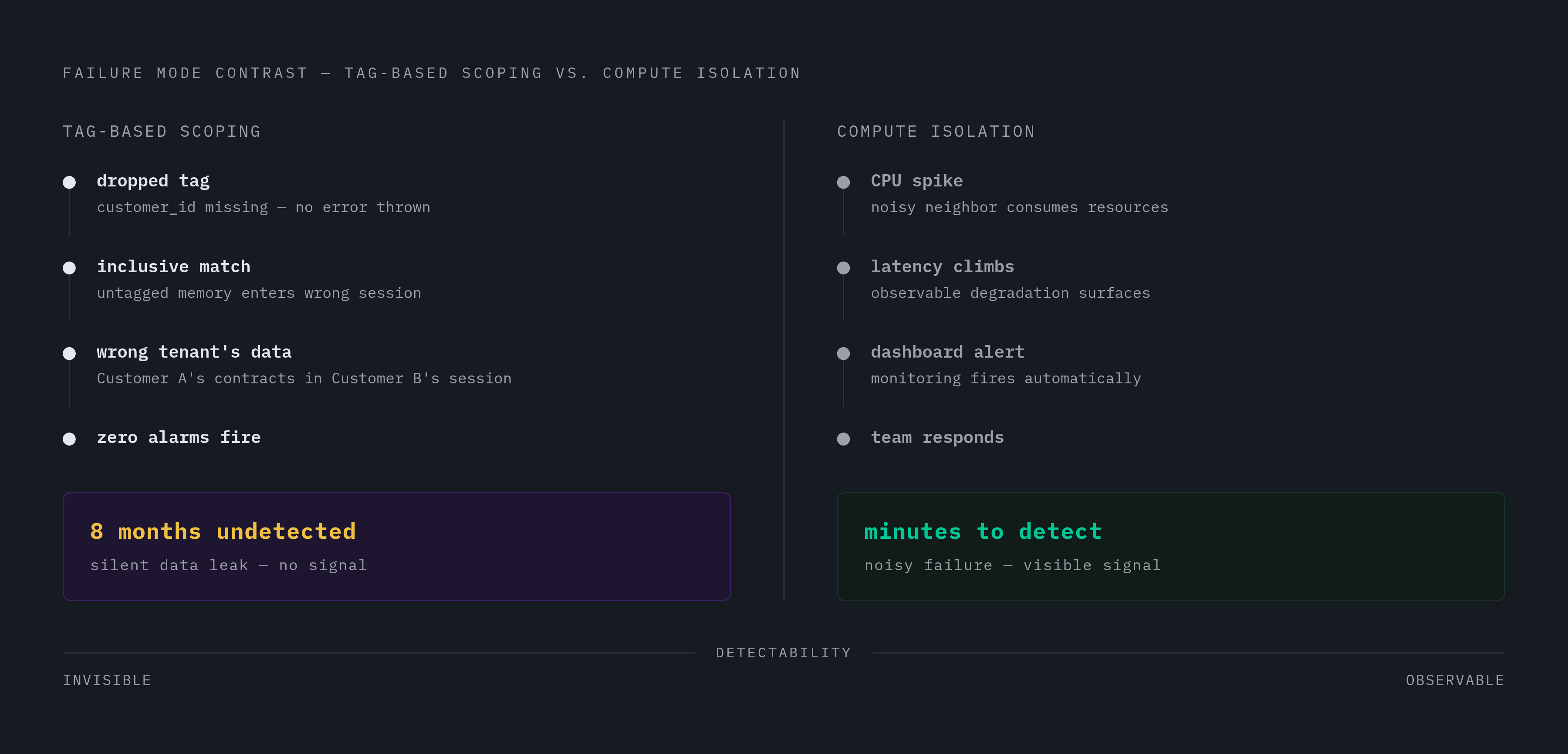
A support SaaS scoped its agent memory with a customer_id tag inside one shared bank. One retain call went out without the tag attached. Customer A's contract terms turned up inside Customer B's session, word for word, because the missing tag didn't throw an error. It just defaulted to a wider match. That's the whole story, and it's also the whole argument for this piece: tag-based scoping fails silently, and silent failure at the memory layer is a different animal from a performance blip in a shared compute pool.
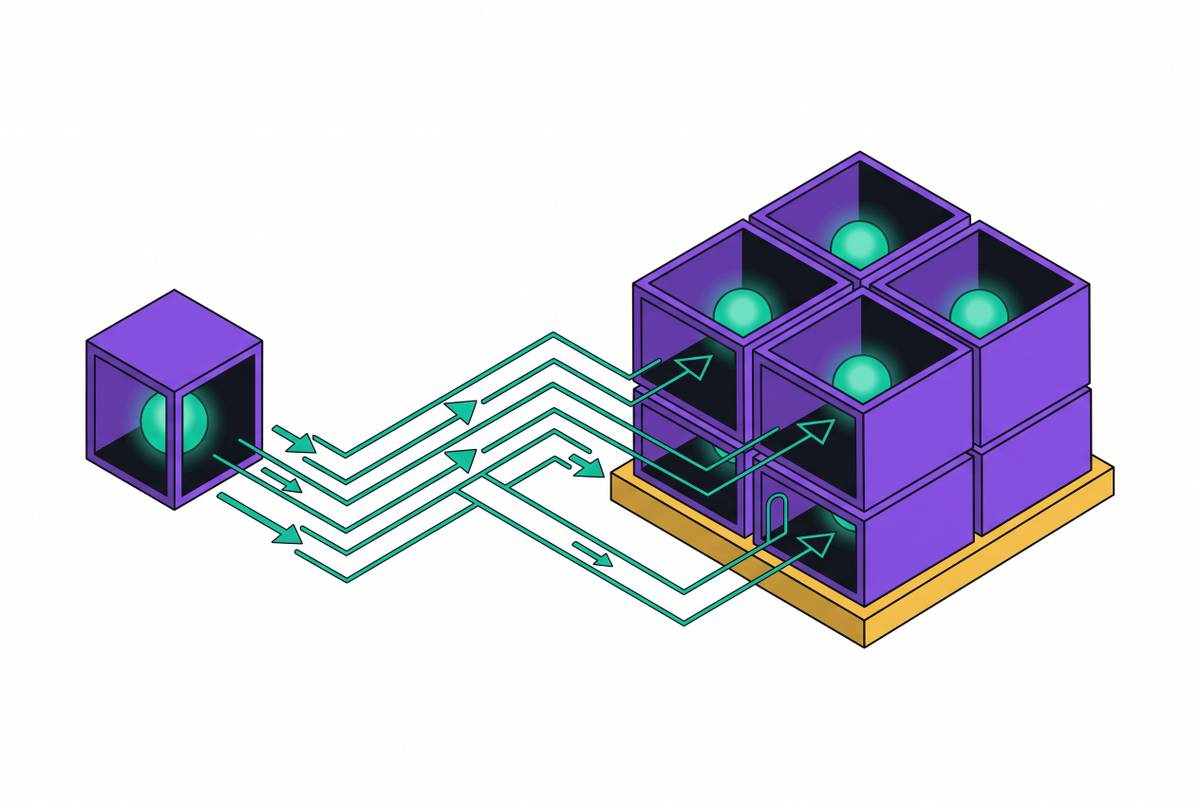
Here's the mechanism, spelled out plainly. Most retrieval systems that scope by tag default to an inclusive match when the tag is missing. So a single dropped parameter doesn't get rejected. It gets accepted, and the untagged memory floats into whatever session asks for it. No alarm goes off. Compare that to a noisy-neighbor problem in a shared compute cluster: CPU spikes, latency climbs, someone notices within minutes because the dashboard says so. A memory leak has no dashboard. The agent answers confidently, using the wrong tenant's data, and everything looks fine on the surface.
This isn't hypothetical. A documented case involving a multi-tenant agent product found that a bug in authentication logic, triggered through session cookie manipulation, let one client read another client's conversation history. The bug sat there for eight months before anyone caught it. Eight months of exposure, zero detected incidents, until someone finally found it. That gap between "the bug exists" and "someone notices" is the entire danger of scoping memory by filter instead of by boundary. Stricter filtering doesn't fix this. The filter is the single point of failure, no matter how carefully it's written, because the failure mode is a missing parameter, not a wrong one.
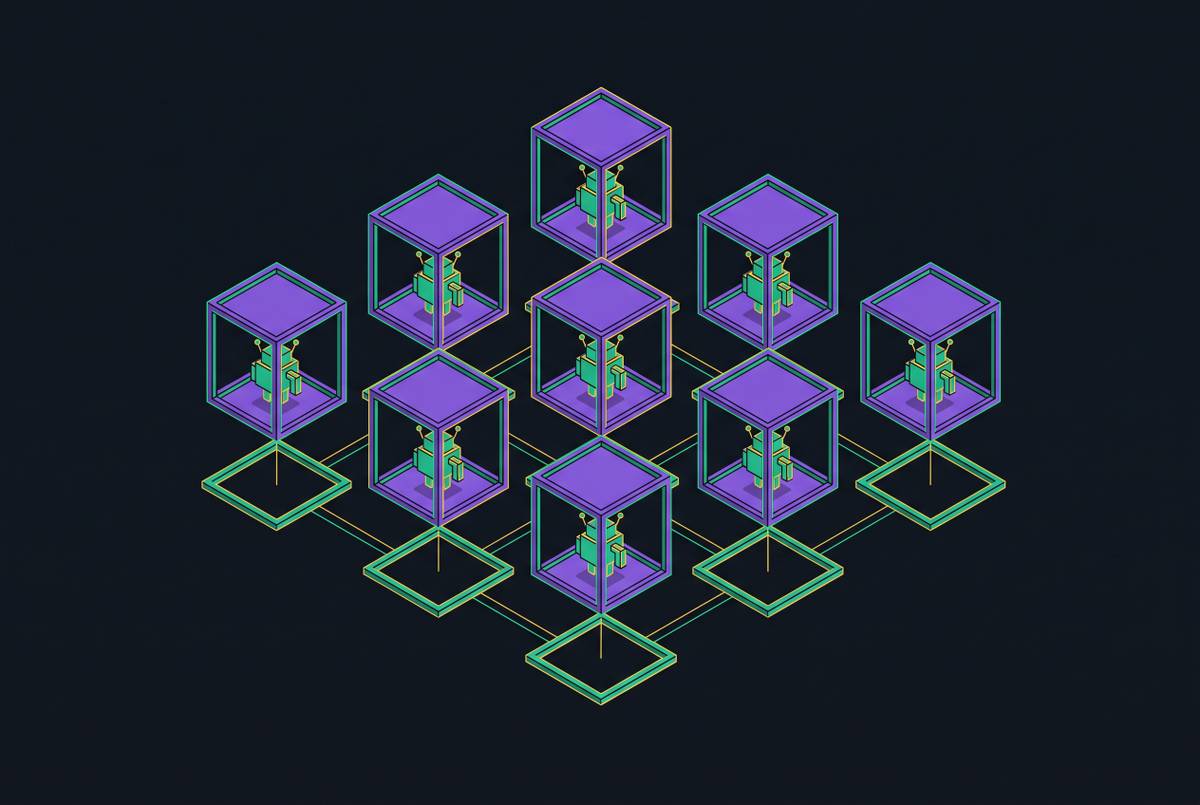
The fix isn't a smarter filter. It's a real boundary: one memory bank per tenant, so there's nothing left to forget to tag.
What governed memory actually requires beyond retrieval quality
Most memory systems in use today were built around a single-agent picture: one user, one conversation thread, one stream of retrieval. That assumption holds up fine until a product runs a fleet of tenants through shared infrastructure, at which point the whole model starts to crack.
The Governed Shared Memory paper (arXiv:2606.24535, June 2026) makes the case that AI memory has stopped being a context-window problem and turned into a distributed-memory problem, one that needs the same systems discipline long applied to databases and event-sourcing pipelines. The paper names four failure modes that better retrieval alone can't touch:
- Unauthorized leakage, where a tenant reads a memory it was never scoped to see.
- Stale propagation, where an outdated fact keeps steering agent behavior after it's been overwritten.
- Contradiction persistence, where two conflicting facts sit in the store with nobody resolving which one wins.
- Provenance collapse, where a memory can no longer be traced back to whoever wrote it.
None of these are retrieval-quality problems dressed up in new language. They're database-consistency and distributed-systems problems that happen to show up during a retrieval call. The four primitives that answer them (scoped retrieval, temporal supersession, provenance tracking, and policy-governed propagation) map one-to-one onto those four failures, and they form the spine of everything that follows.
One distinction matters before going further. In a single-tenant system, a provenance gap or a stale fact is an accuracy issue, annoying but contained. In a multi-tenant system, the same gap is also a compliance problem and a liability problem, because the wrong answer might belong to someone else's customer.
Per-tenant memory banks as the foundational boundary
Every durable memory record needs a tenant_id as a first-class column, not a tag bolted on after the fact. It has to be mandatory, and it has to be enforced by the database itself through row-level security, not left to application code to remember every time.
The Oracle developers blog made this point directly: tenant isolation belongs in the database layer, not just the app layer. Put tenant_id on every durable memory row and protect it with row-level security (RLS) so a query can't accidentally cross a boundary it was never supposed to touch.
There are three real options here, and they trade off differently:
- Fully siloed infrastructure per tenant. Best isolation available, but the cost and operational overhead climb fast as tenant count grows.
- Fully shared storage filtered by tenant_id. Cheapest to run, but one missing filter parameter is a breach, as the opening example shows.
- Hybrid namespace isolation. Shared infrastructure underneath, but data separated into namespaces or workspaces with access controls enforced at the application layer.
The hybrid model is the practical standard for a reason: it gets close to the isolation guarantees of separate stores without paying for a dedicated database instance per customer. It scales.
Vector databases need their own version of this discipline, and it's easy to get wrong because semantic search is approximate by nature. A query can return a near-match from the wrong tenant's namespace if the filter only runs at ingestion time instead of on every single retrieval call. The fix: a unique namespace per tenant (tenant_acme, tenant_widgetco, whatever the naming scheme), every vector stamped with its tenant_id, and a mandatory metadata filter attached to every query, no exceptions. For finance or healthcare products, namespaces inside a shared index probably aren't enough. Separate indexes are the safer call there.
The storage layer needs the same treatment: per-tenant volumes attached exclusively to that tenant's sandbox, tenant-scoped filesystem paths. Get this right and it closes off the whole category of path-traversal and symlink bugs that let one tenant's process wander into another tenant's directory.
Scoped retrieval in practice: what the enforcement surface looks like
Identity has to travel with the agent everywhere, not just at login. Every tool call, every memory read, every file request needs the tenant context attached. A session-level tenant ID isn't optional configuration. It's the thing that makes every other control downstream actually mean something.
Design-time reasoning about scope isn't enough on its own, and there's a concrete finding that proves it. The Governed Shared Memory paper's live evaluation of MemClaw found that tenant isolation held up in general, but sub-tenant scope wasn't enforced on a direct GET-by-id call for agent-scoped credentials. That's a real gap, one that only showed up under live testing, not architecture review, and it was disclosed during the study. The lesson generalizes: a system can look correctly scoped in every design doc and still leak through one specific API path nobody thought to test.
Tools need the same scoping discipline. An MCP tool like read_file or a memory retrieval function has to be locked to the tenant's own root directory or namespace. Leave the search tool unscoped and the agent effectively holds admin access to the entire store, regardless of what the memory schema says.
OWASP's framing on this is useful and blunt: treat the model like any other user. Validate everything it produces before acting on it, because code or queries the agent generates at runtime are untrusted by definition, the same way a plain API request from an anonymous client would be. A large share of organizations report having run into improper data exposure or unauthorized access tied to AI agents. In a shared execution environment, every one of those incidents becomes a cross-tenant event instead of a contained one.
Audit logging closes the loop. Every memory retrieval and file access needs to log the tenant ID involved, in a form that's queryable later for compliance review or incident response. Without that log, there's no way to answer the question that matters most after an incident: who read what, and when.
Temporal supersession: handling facts that change after they are stored
An agent stores a fact at time T. The underlying reality changes at T plus some interval. Nothing marks the old record as stale, so the agent keeps retrieving and acting on a fact that's no longer true. That's stale propagation, and it's a quiet failure because nothing about the retrieval call looks wrong.
In a single-tenant setup, that's an accuracy bug, embarrassing but fixable. In a multi-tenant setup, it compounds: a stale fact about a customer can surface in a session that should reflect the update the customer explicitly made. The customer changed something, told the system so, and the agent acted like they never did.
Temporal supersession handles this by marking the older record non-active when a contradicting write comes in, rather than deleting it outright. The audit trail stays intact; the stale version just drops out of active retrieval. Sounds simple, but there's a subtlety worth flagging. The Governed Shared Memory paper found that a synchronous near-duplicate gate can reject a contradictory write before the asynchronous contradiction detector ever sees it, meaning the gate mistakes a genuine contradiction for a duplicate and drops it silently. Supersession only works when the conflicting write actually gets admitted into the store. If the gate throws it out first, nothing gets superseded, and the stale fact just sits there uncontested.
Schema-wise, per blogs.oracle.com, durable memory needs versioning, supersession markers, and expiration fields, not just a plain write timestamp. A timestamp alone can't tell you which version is authoritative.
And critically, for multi-tenant products, this logic has to be tenant-scoped on its own terms. A fact marked non-active for Tenant A can't be allowed to bleed into or override the active record for Tenant B, even if both tenants happen to reference the same underlying entity under different contracts or contexts.
Provenance tracking: making every retrieved memory traceable
Provenance collapse means a memory can't be traced back to who wrote it, which session produced it, or which agent stored it in the first place. Once that link is gone, audits become guesswork, deletion requests can't be verified, and incident response turns into archaeology.
The cleanest positive result in the Governed Shared Memory paper's evaluation involved exactly this. All 50 depth-four derivation chains tested were reconstructed with the correct writer identity attached, at sub-second latency per hop. That's the bar: even a memory that was derived from another memory, which was derived from another, four layers deep, should still trace cleanly back to its origin, fast.
Getting there requires a few schema-level commitments:
- Writer identity on every record: which agent, which session, which tenant produced it.
- Derivation chains stored explicitly, not inferred after the fact, whenever one memory is generated from another.
- Source tracking for anything pulled from a knowledge base: which document, which ingestion run, which version of that document.
This matters at the product layer for a reason that has nothing to do with engineering elegance. GDPR and similar regimes require the ability to identify and permanently delete everything tied to a specific user, and provenance collapse makes that impossible to prove. Oracle's AI Developer Blog puts it plainly: teams need to be able to audit what an agent remembered and prove a deletion request was actually honored, not just that a delete call went out into the system at some point.
Logging every access with a tenant ID is the operational floor. Derivation-chain tracking is what makes that log mean something when someone actually needs to use it.
How memory scoping interacts with compute isolation in agent runtimes
Memory scoping and compute isolation solve two different problems, and both have to hold at the same time, independently, because one doesn't cover for gaps in the other. Memory scoping governs what an agent can read. Compute isolation governs what it can do.
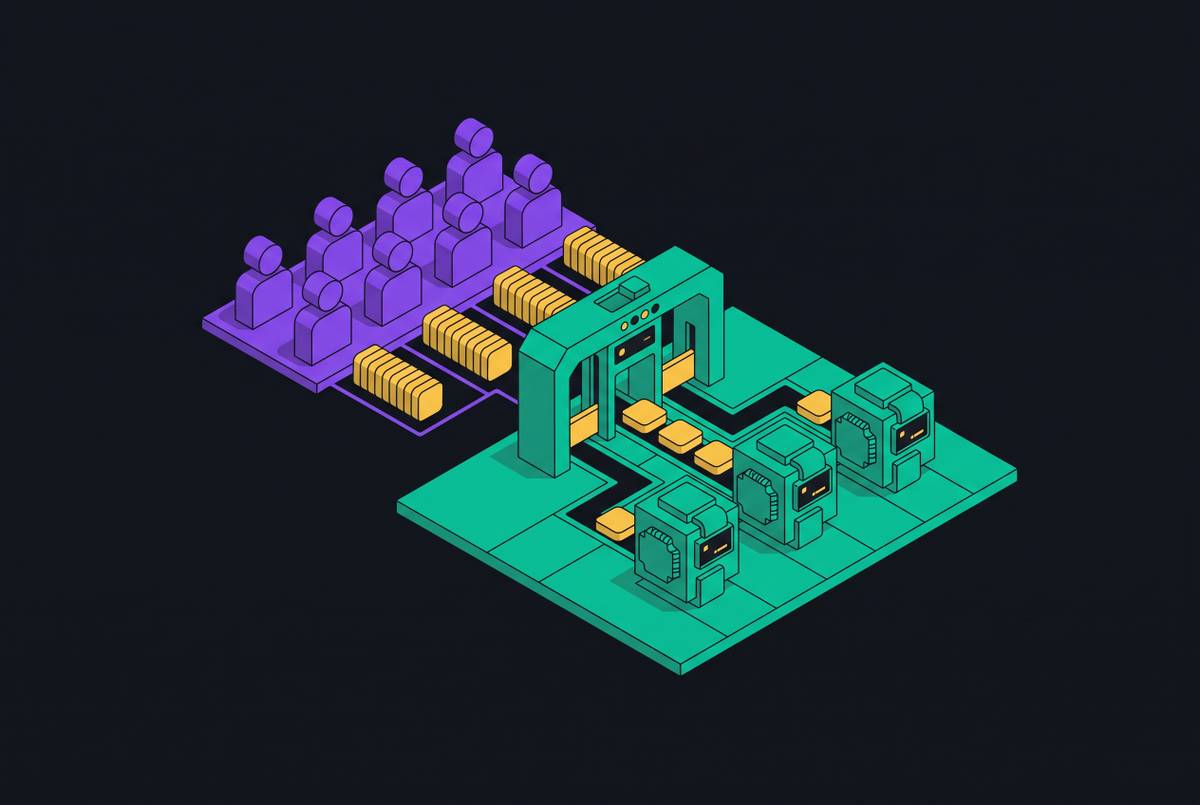
A shared execution pool has its own failure mode. One agent stuck in an infinite loop can starve CPU for everyone else sharing that pool, and other tenants feel it immediately as degraded performance. Co-located agent workloads can show performance degradation in the range of 5 to 50 percent from interference alone, just from resource contention, no security bug required.
Container-level isolation helps but doesn't fully close this off for arbitrary agent-generated code. Containers share a host kernel, so a kernel exploit inside one tenant's sandbox can, in principle, reach every other tenant sitting on that same node. Container escape vulnerabilities aren't rare, either: CVE-2019-5736 and CVE-2024-21626 (both in runc) are two recurring examples of the pattern.
MicroVM isolation raises the floor by giving each tenant's workload a dedicated guest kernel, enforced through hardware virtualization rather than shared kernel namespaces. Firecracker, for instance, boots a microVM in 125 milliseconds or less and adds under five MiB of memory overhead per VM, so the isolation gain doesn't come with a heavy performance tax.
Worth looking at how a few actual agent runtimes handle this today. OpenClaw is built for self-hosting but supports Kubernetes or Docker Swarm for production scale, and running that securely takes real DevOps depth; by mid-2026 it had shipped 82 releases and hardened its security posture along the way. Hermes keeps dependencies minimal and deploys through serverless functions or plain Docker containers, but it runs commands on the host by default, which means the operator has to add sandboxing themselves to limit the blast radius; three CVEs were disclosed in April 2026, including a path traversal in its WeCom adapter (CVE-2026-7396). Claude Code offers enterprise controls, HIPAA readiness, SCIM provisioning, IP allowlisting, with premium seats priced at $150 per developer per month as of March 2026.
The Hermes CVE is worth sitting with for a second. The path traversal lived in a platform adapter, not in the core agent logic. That's the pattern worth remembering: isolation failures tend to surface in the storage and integration layers, not inside the model itself. A strong memory boundary doesn't make up for a shared kernel, and a hardened compute sandbox doesn't stop an agent from reading memory it was never scoped to see. Both boundaries have to hold on their own terms.
What the integration layer does to the tenant boundary
An agent connecting to Gmail, Slack, GitHub, or a CRM through a tool call brings a new threat surface with it. If the credential behind that connection and its permission scope aren't tenant-bound, the agent can read or write straight across the boundary the memory layer was built to enforce, no memory leak required at all.
There's a specific vector worth naming: a malicious MCP tool that looks like it does something ordinary, formatting a JSON payload, say, can carry hidden instructions that fire the moment an agent invokes it. Without sandboxing around that tool call, it inherits whatever permissions the agent's process already holds.
Composio has become the dominant integration layer for production agents on this front, offering more than 1,500 toolkits as of August 2026 across apps like Gmail, Slack, GitHub, and Notion, exposing over 20,000 individual tools through one MCP endpoint. How it handles tenant-scoped auth is the relevant part: managed OAuth flows, automatic token refresh, and credential lifecycle management, with credentials scoped per connection rather than shared across agents. Teams can also restrict which specific actions get exposed to a given agent or group, rather than handing over blanket access. Composio's managed cloud service holds SOC 2 and ISO/IEC 27001:2022 certifications.
The governance rule here is the same one from the memory layer, just applied one hop further out: every tool call has to carry tenant context with it, and permission scope needs enforcement at the connection level, never assumed just because the agent's session looked legitimate. A large share of organizations report data leaks tied to employees sharing sensitive information with AI tools. For a SaaS operator running multi-tenant agents, cross-tenant leakage through an integration connector isn't a theoretical risk. It's a documented category, and it happens at the edge, not the center.
Turning memory governance into a per-customer product capability
Get the scoping right and something genuinely valuable falls out of it: each customer's agent builds up its own body of knowledge over time, preferences, entity facts, workflow outcomes, that persists across sessions, gets sharper with use, and belongs provably to that customer alone. That's the actual product promise sitting underneath all this infrastructure work. Nobody buys "row-level security." They buy an agent that remembers their business correctly and never mixes it up with someone else's.
Building this in-house is a real undertaking, not a weekend project. It means provisioning a per-tenant namespace in the vector store for every new customer, maintaining row-level security policies in the relational database as the schema evolves, and designing a provenance schema with derivation-chain tracking that holds up under audit, not just under normal operation. None of these pieces are optional add-ons. They're the difference between a memory system that works in a demo and one that survives a real incident, eight months of quiet exposure, and the customer asking the only question that matters: who else saw this.