Multi-Tenant Agent Architecture Where Every Signup Owns a Persistent Isolated Runtime
Per-tenant runtimes keep agent memory and execution from leaking.
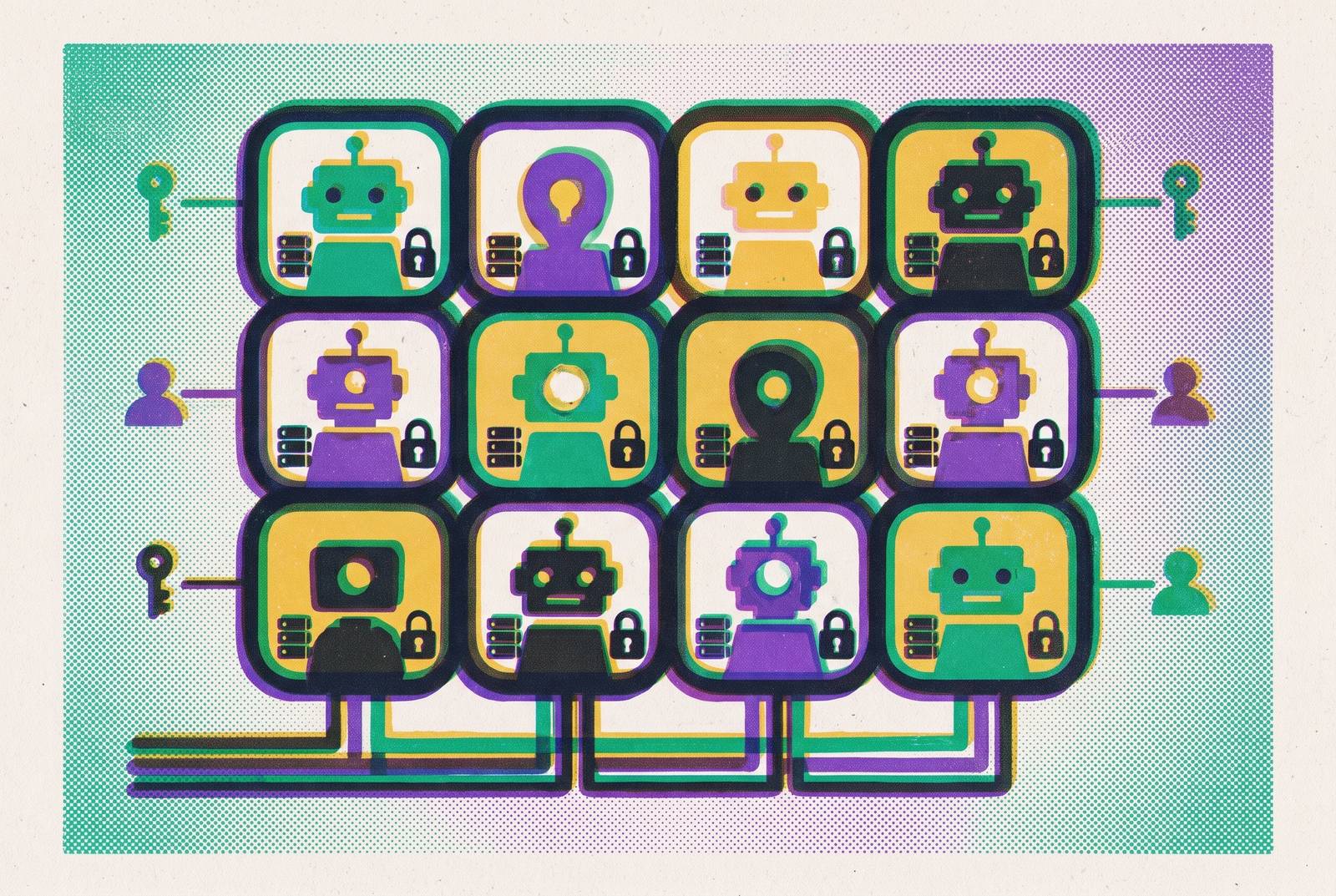
Automatic agent provisioning at customer onboarding means each signup creates an isolated, persistent runtime with its own scoped storage and authenticated connections. For an agent-powered SaaS, that is the right default, rather than a shared environment separated only by tenant_id filters. The architecture must protect both execution and memory, because a plausible answer built from another customer’s data can cause damage before anyone detects the leak.
Why standard multi-tenancy breaks when agents enter the picture
There is no error code or stack trace. The agent returns a convincing answer, but part of it came from the wrong customer’s documents. Semantic retrieval silently returns fragments from another tenant’s index, and the agent treats them as relevant evidence. By the time a customer notices, the information has already crossed the boundary.
Traditional multi-tenancy assumes stateless HTTP requests, predictable resource use, and deterministic output boundaries. Agents break all three assumptions at once. Their context windows ingest documents, embeddings, and tool results from surrounding infrastructure, making each retrieval path a possible contamination surface. They also keep their conversational history, planning state, and tool-execution context throughout long sessions. A leaked fragment can therefore influence later calls, or later sessions when corrupted state persists.
Shared execution brings noisy-neighbor effects on top of that risk to data. The resources one tenant uses can affect another’s work, while sessions that run for a long time give contaminated context more chances to spread. A query filter addresses only part of the problem because retrieval, execution, and memory all need tenant boundaries. Once a leak is discovered, remediation can require months of auditing every retrieval operation, tool executor, and memory manager in the execution graph. This is not a configuration fix after the fact.
The three isolation models and what each one actually costs
Silo gives each tenant a separate runtime, vector index, and API endpoint. The boundary is enforced through separate infrastructure. It has the highest capacity cost because resources are provisioned per tenant, but the lowest remediation cost because recovery can use infrastructure-level rollback. Its strongest fit is enterprise deployment, especially where requirements include HIPAA, SOC 2, or FedRAMP. The extra spending buys a harder partition while leaving compliance requirements to be met.
Pool shares infrastructure and applies tenant_id filtering at the query layer. It maximizes utilization and has the lowest infrastructure cost. During remediation, a suspected leak calls for an audit of the execution graph rather than a rollback within separate infrastructure. Pool works well for PII-free, low-risk data, but saves less as the risk of contamination builds.
Bridge shares some parts of the system and keeps others separately isolated. Most platforms above a hundred customers end up there. Designing for Bridge from the start, even when launching with Pool, puts tenant scoping in place before the platform grows. Otherwise, the migration requires injecting scoping logic into retrieval paths that were never instrumented for it. That is the expensive route out of pooling.
Regulated data makes this choice less forgiving. Buyers in healthcare and finance expect SOC 2 Type II, ISO 27001, and the framework for their industry. A Pool architecture that handles PHI or financial data falls short on compliance from the start because of how it is built, and filtering alone cannot fully close that shortfall. The decision therefore turns on data sensitivity and recovery obligations as well as utilization. The money saved on infrastructure must be weighed against the cost of proving that the boundary works.
What session-isolated microVM execution actually looks like in production
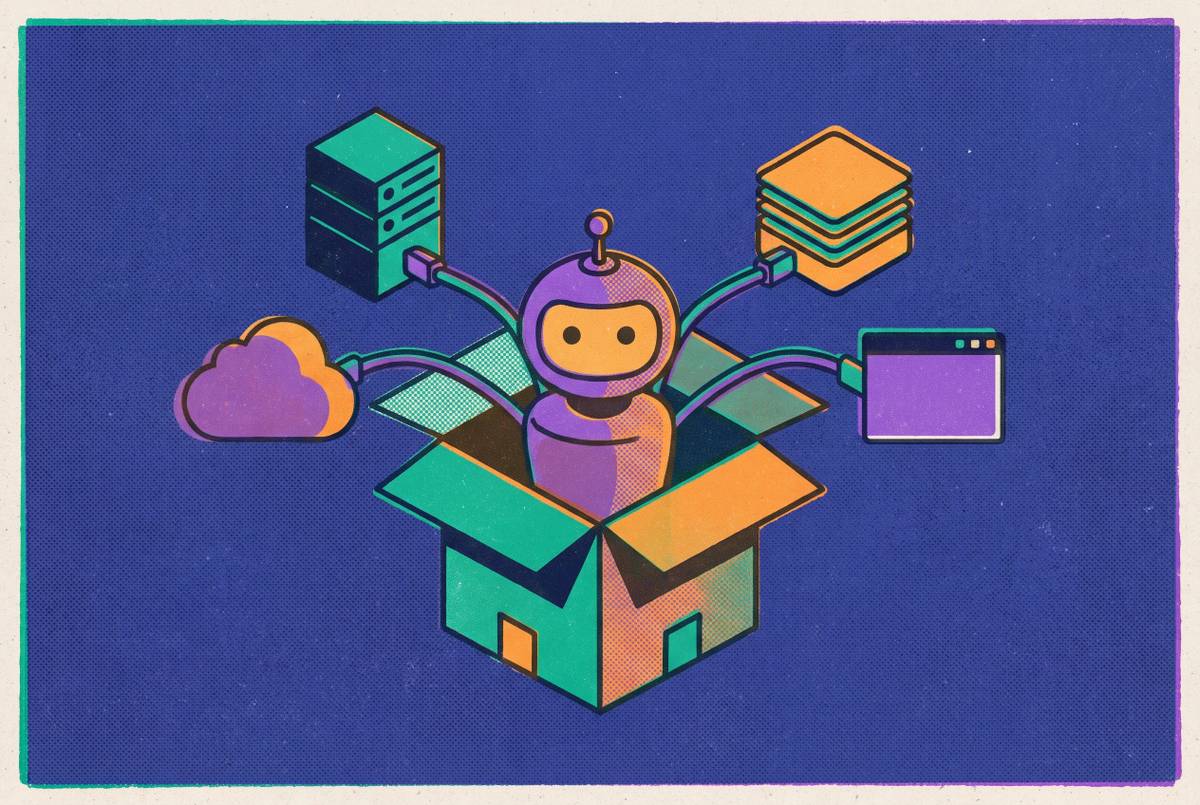
Axonius makes the Silo model concrete through its deployment on Amazon Bedrock AgentCore. Each user session runs in an isolated microVM, and the agent container images for each tenant are stored in Amazon ECR. Every customer gets a separate AgentCore runtime with a dedicated elastic network interface, or ENI, inside that customer’s VPC and subnet. One customer’s agent has no network path to another customer’s data.
At runtime, the agent validates a JWT against the customer’s Axonius application. Combined with the dedicated network placement, this scopes the session to one tenant and enforces data isolation at the gateway. AgentCore Runtime also supports an optional persistent file system per session through configurable Managed Session Storage. That storage preserves session-scoped files and intermediate computation artifacts across multi-step interactions. Isolation and persistence serve different jobs here.
MicroVMs address execution risks that shared-kernel Docker/runc containers do not adequately contain for untrusted agent code. A long-running script can outlive the session that started it, while installed packages can remain in a reused container’s writable layer. Separate execution boundaries keep that shared environment from serving as the tenant boundary. OpenAI and AWS formalized the persistence principle in their Stateful Runtime Environment concept, announced on February 27, 2026. Its premise is that agents need owned runtimes that preserve working state.
Kubernetes SIG Apps launched Agent Sandbox as an open-source subproject, previewed at KubeCon NA in November 2025. It provides per-agent isolated pods, default-deny network policies, and persistent storage, and reached v1.0 with a v1beta1 API in August 2026, with GA on GKE. It is not a built-in Kubernetes feature and did not ship in v1.32. Automatic scale-to-zero with state checkpointing belongs to the separate, GKE-exclusive Pod Snapshots feature.
Why persistent state is an architectural requirement, not a convenience feature
An isolated environment that resets on every invocation protects execution but cannot retain an agent’s working memory. A planning agent may hand off subtasks, take real-world actions, and run for hours without a human stepping in. Its planning state, tool-call history, and intermediate artifacts are part of the work itself. Starting again is not the same as continuing. A prompt cannot substitute for a coherent execution environment that preserves those records.
Vishnyakova’s 2026 context engineering paper frames context as the agent’s operating system. It identifies five production-grade quality criteria, namely relevance, sufficiency, isolation, economy, and provenance. Each depends on keeping a coherent, tenant-scoped environment of information across sessions. This makes isolation a quality requirement as well as a security boundary. An agent using the wrong tenant’s history is reasoning from the wrong environment.
Agent memory can survive across sessions while remaining nonportable across systems, opaque to audit, and difficult to govern through eviction policies. The user can write to memory yet have little control over it. For a hosted platform, that becomes a compliance liability unless the platform explicitly owns the persistence layer and scopes it per tenant. Whoever controls the agent’s context controls the information that shapes what it does, so durable memory needs rules for how it is managed as well as a place to live.
What the production gap looks like for teams trying to build this themselves
A working agent does not establish a working provisioning system. The gap becomes visible when every customer needs a separate agent running against live data, with its own state and connections. Cleanlab’s survey of engineering leaders found that only a small fraction had production agents with real authority. Most regulated enterprises, and a significant share of unregulated organizations, rebuilt their agent stack every three months or faster. That points to immaturity in the production layer.
On a self-managed stack, each customer adds VPS setup, container or microVM configuration, network namespace isolation, and persistent file system allocation. Monitoring, recovery automation, and update propagation follow the runtime into operation. These obligations recur for every customer, even when automated. They are not a single deployment task that disappears after launch. Tenant count expands the fleet that must be maintained, recovered, and audited.
Self-hosting can be a valid choice, but the server bill is only part of its monthly cost. Developer maintenance dominates at low tenant counts and does not disappear as the fleet grows. Connections add another distinct responsibility because an agent using Gmail, Slack, GitHub, WhatsApp, or tools in Composio’s catalogue needs tenant-specific authentication and scope. Compute isolation does not establish credential isolation. For a founder, the trade-off is the time spent operating those boundaries instead of improving the agent and selling the product.
What a managed per-user runtime model eliminates for the operator building on top of it
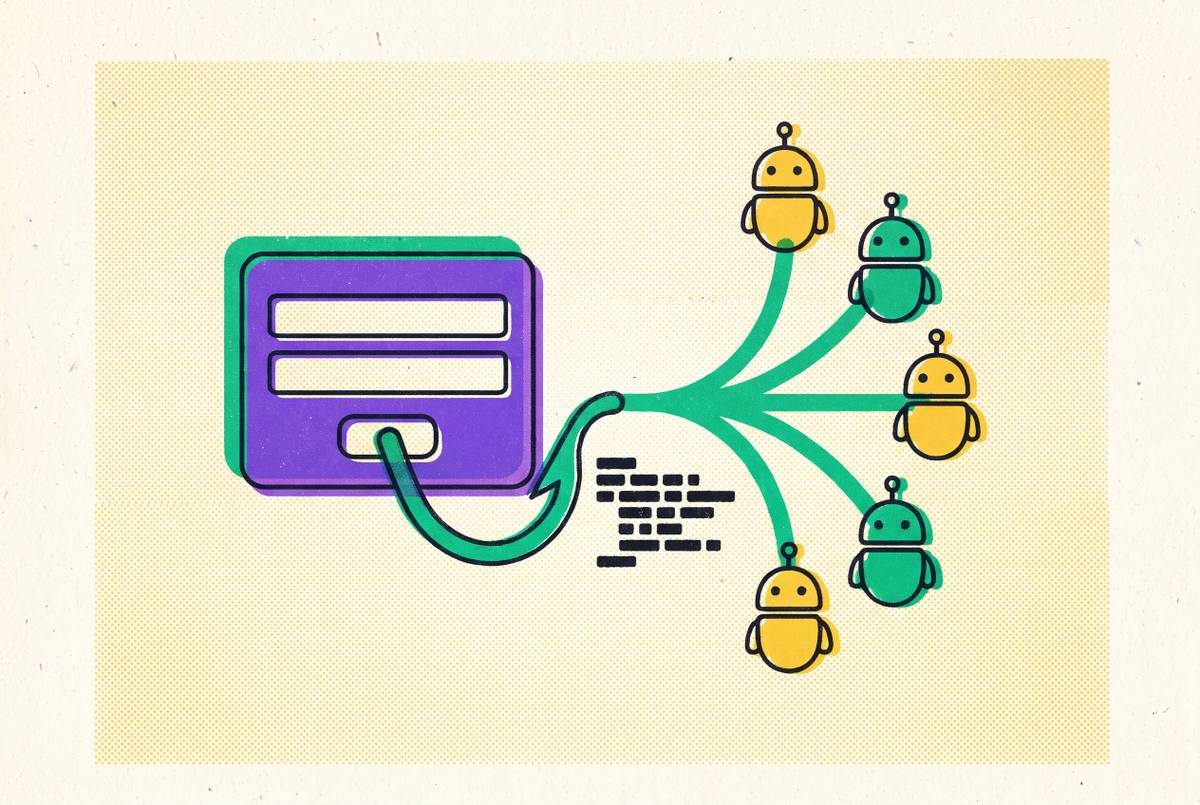
The correct unit of scale is one isolated, persistent agent per customer, provisioned automatically at onboarding. In practice, a signup triggers creation of the sandboxed execution environment, scoped storage, and authenticated integration connections. No founder needs to log in remotely to a server or run a deployment script. A managed platform absorbs the infrastructure work required to make that event repeatable.
Stripe offers a useful comparison for this division of labor. It let software companies take payments without becoming payments companies. The equivalent runtime model lets a founder supply a dedicated agent without taking on provisioning, securing, monitoring, updating, and recovering every customer’s environment. The work still exists, but the platform operates it. The operator can then spend the saved time on the service customers actually buy.
White-label infrastructure extends that division to the customer experience. Each customer can receive a private, persistent, branded agent without seeing the underlying vendor’s brand, billing interface, or infrastructure layer. The operator keeps what clients pay after covering the platform’s costs. A ten-client deployment on dedicated managed instances has a known monthly infrastructure cost, against which a per-client package can be priced. It offers a greater business advantage when the founder’s work does not have to grow at the same rate as the client count.
Security is another responsibility the platform can absorb. Encryption in transit and at rest, per-tenant runtime isolation, SOC 2 compliance, and audit logging can be platform properties. The operator can point to those platform properties when buyers ask about the infrastructure. They do not make every application decision compliant. The useful distinction is between inheriting an established infrastructure control and having to design, operate, and explain it independently for each sale.
The productization step — turning per-user runtime architecture into a repeatable B2B delivery model
An agent-powered SaaS becomes a repeatable product when a new customer can receive an isolated persistent runtime and begin billing without infrastructure intervention. A working demo does not meet that test. The delivery unit is a working agent in the customer’s hands, whether the offer is a fixed-scope sprint, monthly subscription, audit/assessment, micro-product, white-label platform, or managed operations. Each model needs delivery that works every time without relying on a founder to hand-configure another instance.
Managed operations adds monitoring, prompt tuning, model upgrades, and incident response on the client’s behalf. It is the stickiest model because switching costs are high. Yet that service is only viable when the operator is not also performing the underlying provisioning labor for each customer. Otherwise, the same team must get better results for clients while building the setup needed to deliver those results over and over. A managed runtime separates those responsibilities.
Vishnyakova’s framework gives operators another way to control the product. Whoever controls the agent’s intent controls its strategy, and whoever controls its specifications controls how far it can scale. For an operator, organizational goals and quality standards therefore belong in the agent infrastructure. Models can be substituted without replacing that whole service definition. This governance layer helps defend the product against both model substitution and competitive entry.
Enterprise delivery also depends on where policy takes effect. Regulated buyers in 2026 expect the relevant compliance stack, including industry requirements such as HIPAA, GDPR, EU AI Act, and NIST AI RMF, beyond the general assurance frameworks already discussed. Platform-level controls and credentials can shorten the procurement work behind those expectations. EHV architecture research identifies the remaining timing problem, as retrospective audits introduce policy latencies measured in days while agents act at machine speed. Its answer is enforcement inside the runtime, making runtime design a compliance decision as well as an infrastructure decision.
The commercial destination is a signup that becomes a running service. When provisioning, security, monitoring, updates, and recovery are handled at the architecture layer, growth does not depend on a founder configuring the next customer’s environment. The founder can sell and improve the agent.
Sources
- Context Engineering: From Prompts to Corporate Multi-Agent Architecture
- Ethical Hyper-Velocity (EHV): A Hardware-Rooted Zero-Trust Runtime Enforcement Architecture for Agentic AI Systems
- Shared infrastructure, isolated tenants: Pool model multi-tenancy with Amazon Bedrock AgentCore
- Building multi-tenant agents with Amazon Bedrock AgentCore
- Always-OnAgents:A Survey of Persistent Memory, State, and Governance in LLMAgents
- How Axonius built secure multi-tenant AI agents on Bedrock AgentCore