Platforms That Auto-Provision a Dedicated Agent per Customer at Signup
Isolate each customer's agent to earn the architectural claim of true per-user provisioning.

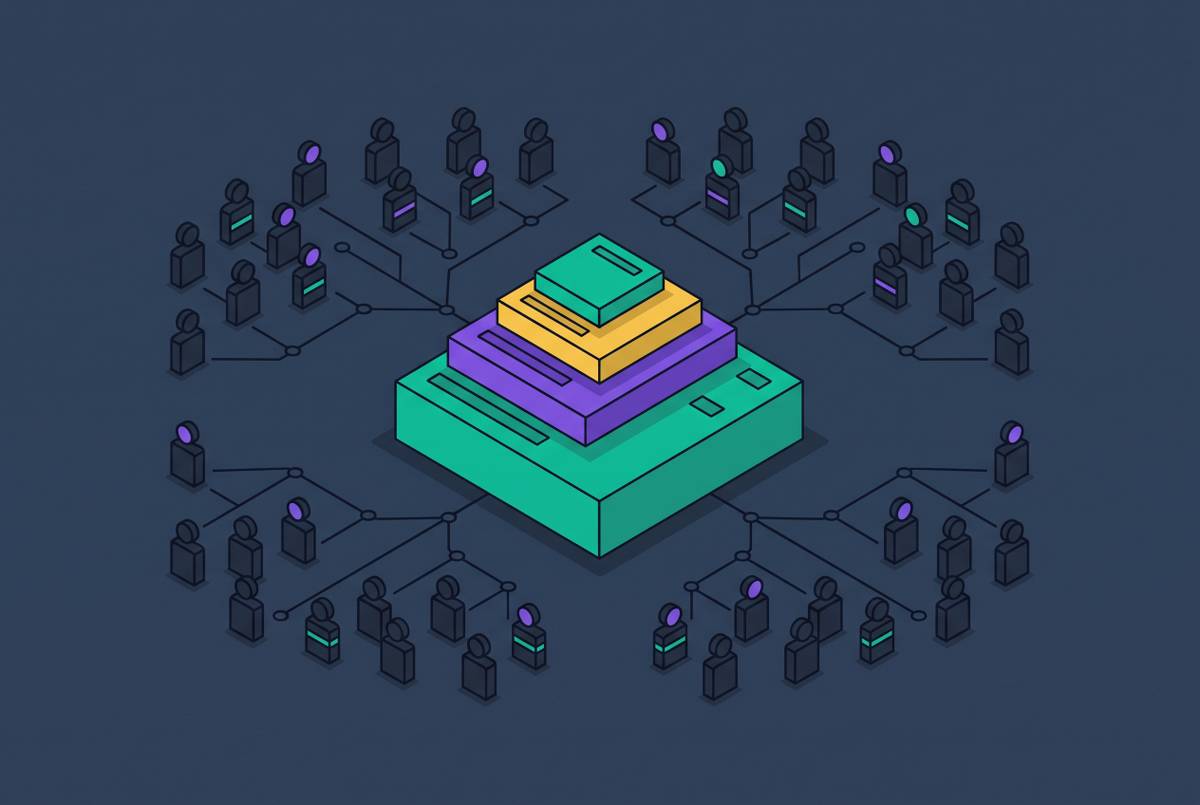
Giving each new customer their own AI agent automatically at signup requires a platform that connects isolated sandboxes, per-user credentials, persistent state, and signup-triggered activation. All four have to be ready before onboarding ends. A shared agent pool or a manually created instance does not meet that standard, even if the platform calls it a dedicated agent.
Why a dedicated agent per customer is an architectural commitment, not a feature
“Does it support multiple users?” is the wrong test. A shared-pool deployment can serve many customers, and an operator can manually configure separate instances for them. Neither arrangement proves that a new customer receives an isolated, lasting agent as part of signup. The distinction is not how many users the platform accepts, but what it creates for each one and when that environment becomes usable.
That distinction becomes concrete when agents connect to customer systems. An agent that works in Salesforce, Slack, or Gmail must use the right customer’s authorization, and what it does must stay tied to that customer. Its context cannot include another tenant’s data. A customer ID alone cannot keep those boundaries in place if customers still share credentials, files, or the execution environment.
“Dedicated” therefore describes a set of connected guarantees. “Automatic” adds a deadline and removes the operator from the provisioning path. The evaluation frame has four requirements, which are sandbox isolation, per-user credential storage, persistent state, and automatic activation before onboarding finishes.
What sandbox isolation actually means in a per-customer deployment
Sandbox isolation has four layers, and each answers a different question. The execution layer uses a microVM, hardened container namespace, or WebAssembly runtime to separate work per user or task. The policy layer limits access by session or tool, including filesystem and network paths. The observability layer records system calls and network egress for audit. The lifecycle layer handles provisioning, snapshotting, and teardown, including pausing idle environments and restoring their state.
The filesystem rule is simple and firm. Multiple untrusted tenants must never share a writable filesystem. Separate execution without access controls leaves permissions unresolved, while access controls without audit records leave their enforcement hard to demonstrate.
Claude Code’s local Sandbox Runtime uses Seatbelt on macOS or bubblewrap on Linux/WSL2, plus a proxy for network access. Its cloud version uses a short-lived, session-scoped credential for Git access, while actual Git credentials stay outside the sandbox on Anthropic’s servers and are attached by a server-side proxy.
OpenAI Codex runs each task in an isolated container, with network access off by default or controlled through a proxy allowlist. Notion Workers use Firecracker microVMs through Vercel Sandbox, whose firewall proxy can inject credentials into outbound requests without exposing them inside the execution environment. These examples illustrate different isolation mechanisms. They do not, by themselves, establish a complete customer-onboarding system.
Per-user credential storage and why shared accounts break the architecture
An isolated sandbox can still act through the wrong identity. If several customers’ agents use one OAuth token, the work they do in third-party systems runs under the same account. Appending a tenant ID does not give those actions separate authorization. The shared account breaks the audit trail at the point where the agent touches a real customer system.
Credential isolation is therefore a structural requirement. Credentials need encrypted storage tied to the right end-user or organization, automatic refresh for each tenant before they expire, and clean revocation when that customer leaves. Each agent also needs its own identity so that access can be controlled and actions traced.
This is where an apparently multi-tenant design can unravel. Keeping files separate is not enough when the agent must read mail, update a sales record, or write to a repository on a customer’s behalf. Authentication and token refresh have to work for every tenant without people having to fix them as a matter of course.
Composio provides a concrete example through its per-user integration configuration model, which scopes integrations to individual users. That illustrates how the integration layer can preserve the customer boundary. It is not evidence that credential management alone supplies the rest of the dedicated-agent architecture.
Persistent state and what it means for an agent to remember across sessions
Context, files, memory, and prior actions survive the end of a session. Without that continuity, “your agent” is a session-scoped assistant that needs the customer to supply the same background again. A customer ID attached to a fresh environment does not change that experience.
The sandbox lifecycle makes this continuity practical. An environment that pauses when idle and wakes weeks later with its files intact can support a long-lived agent at near-zero cost between sessions. Dedicated does not have to mean continuously running.
Claim status checks, campaign management, and ongoing code review can take days or weeks. Without persistent state, a person has to restart those workflows because the agent cannot pick up where it left off with its prior context.
Persistence does not mean a larger conversational window.
How do platforms activate each customer’s agent automatically at signup?
With automatic activation, the dedicated agent is ready to work before onboarding ends. No founder has to create the instance afterward, no support ticket starts the process, and no later configuration step completes it. A platform can offer isolation, private credentials, and persistent state yet still fail this requirement. The trigger is part of the architecture.
The programmatic path typically uses a single API call to create the sandbox, initialize credentials, and set state. That call must be triggered by the signup event. In a white-label deployment, the same rule extends to each operator’s customers. Their branded agents must activate automatically during their own onboarding.
A founder who provisions, configures, and verifies every instance is constrained by available hours, and hand-configuration introduces differences between customer environments. Faster clicking does not remove that dependency.
Stripe provides a useful analogy for the product boundary. It let software companies take payments without becoming payments companies. The corresponding promise in agent infrastructure is that an AI company can give every customer an agent without becoming an infrastructure company. Automatic provisioning is what makes that comparison hold.
How integration infrastructure connects the four requirements into a working system
The four requirements cannot operate as disconnected parts. Integration infrastructure must tie each agent’s tools, events, and the data it retrieves to the same customer identity for the whole of its lifecycle. Otherwise, a platform may create an isolated environment successfully while failing to deliver the customer’s work to it. Provisioning is only the beginning of that responsibility.
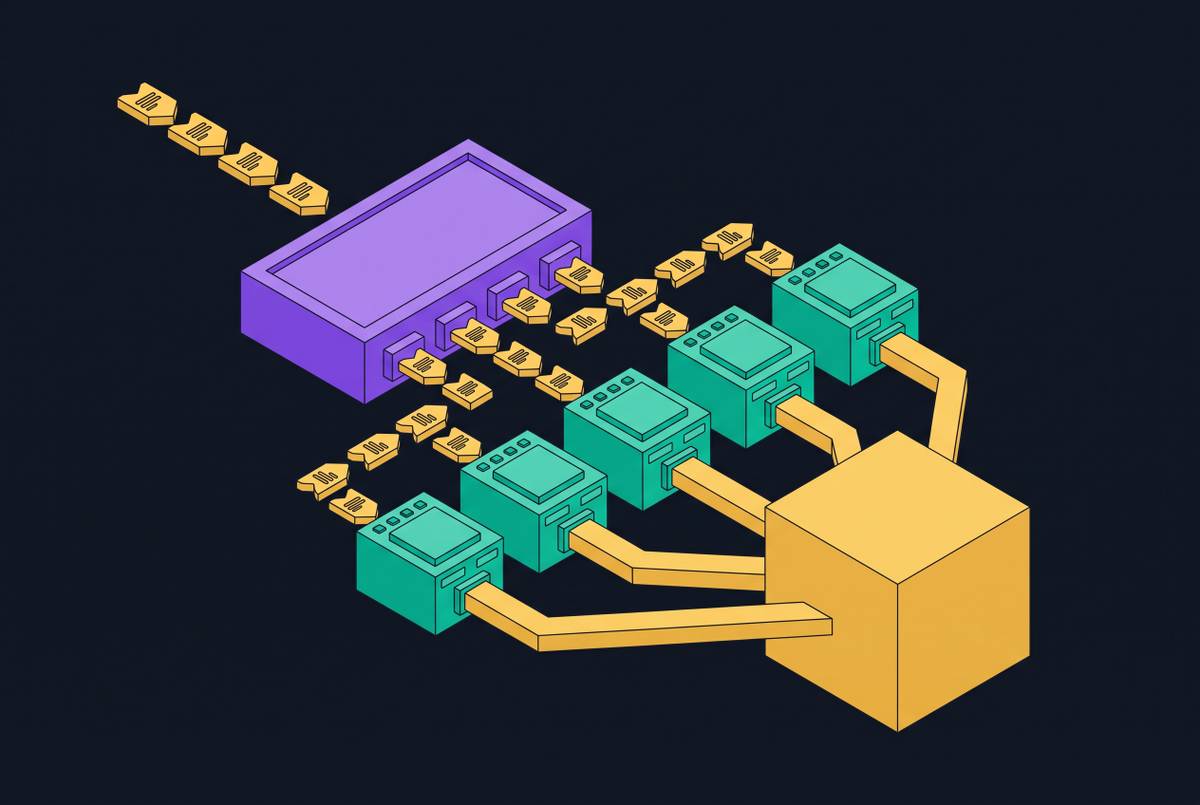
A reference architecture follows the customer boundary from signup onward. The signup event invokes provisioning, which creates the sandbox, initializes customer-linked credentials, and establishes persistent state. The integration layer then routes tool calls, third-party events, and current data to that customer’s agent. When the sandbox resumes, those connections must still belong to the same tenant.
The ongoing work extends beyond calling an API. Tool definitions and error handling need to be kept up to date, and delivering events takes webhook infrastructure, signature verification, and retries. Providers also rate-limit requests, go down, change payload shapes, and send the same webhooks more than once. These issues mean an integration still needs care after it is first built.
Composio illustrates the breadth involved through coverage across office work, sales, support, and engineering, including Gmail, Slack, Notion, Salesforce, Zendesk, GitHub, and Linear. Breadth alone is not the deciding factor. Every connection must preserve per-user scoping, or the integration layer undoes the boundaries that provisioning established.
Security and compliance requirements that the architecture must satisfy before an enterprise buyer signs
Enterprise security tests whether those boundaries can be demonstrated. Per-agent identity, encrypted per-user credentials, immutable audit logging, and sandbox-level network controls provide both operational protections and evidence for review. They are not decorations added after provisioning works. The architecture determines what a buyer can inspect.
SOC 2 Type II is the baseline in this evaluation for enterprise deployments handling customer data. Healthcare deployments also need HIPAA compliance and BAA execution. Ventus AI provides a production example through its SOC 2 Type II and HIPAA compliance, with BAA execution, supporting large volumes of daily claim status checks for Smilist.
The legal distinctions still need to stay precise. HIPAA requires entity authentication under §164.312(d), with no set implementation specifications, and audit controls for systems that work with PHI under 45 CFR §164.312(b). It does not specifically mandate individual-agent logging. Unique agent identities and agent-level records let actions be traced through the architecture, and sensitive exports or changes also need checkpoints where a person gives approval.
Managed platforms fit lower usage volumes, while self-hosted microVM builds can be warranted at higher scale or when data sovereignty requires execution inside the customer’s infrastructure. A hybrid path uses managed infrastructure for development and self-hosting for scale. Certification alone does not show that every customer agent meets all four provisioning requirements.
What platforms that genuinely deliver all four requirements look like in practice
TrueFoundry is strongest here for enterprise governance and data sovereignty, with deployment in a private cloud network inside a customer’s AWS, GCP, or Azure account, per-agent RBAC, and immutable audit logging. Its deployment model requires more setup than one-click provisioning. Those strengths make it relevant to governance-heavy buyers, but they do not establish automatic dedicated-agent creation at signup.
GoHighLevel addresses a different operating model. Its SaaS Mode supports agency white-label workflows through automated account creation, dunning, custom pricing plans, and Stripe integration. That is useful automation for an agency business. It is not purpose-built for per-customer agent sandboxing, so account creation cannot stand in as proof of isolated execution.
A platform delivering the complete architecture must connect those business workflows to a customer-specific runtime. Its cloud API must create isolated, persistent, per-user sandboxes, and its white-label path must get each customer’s branded agent running during onboarding. Customer-scoped integrations must then work inside that arrangement with per-user credentials. Enterprise readiness additionally requires the compliance baseline and encryption in transit and at rest.
The available details support those fit distinctions. They also do not establish that either named option delivers the entire signup-to-agent path. For buyers, the decisive comparison is whether all four requirements operate together before onboarding ends, rather than how many related features appear on a product page.
Where auto-provisioning fails and what to check before committing to a platform
The strongest objection is the complexity tax. Per-customer agents multiply the credential storage, token refresh, sandbox lifecycle, audit logging, and billing instrumentation that must work correctly. Genuine automatic provisioning moves that operating burden to the platform. The founder supplies an API call or onboarding webhook, while the platform absorbs uptime, recovery, updates, and per-customer lifecycle management.
A sandbox created only after someone clicks “add customer” is manual provisioning, even if creation is fast. A shared OAuth connection with tenant tags does not supply separate customer credentials, and an isolated session that loses its files afterward does not supply persistent state. Likewise, company-level SOC 2 Type I does not show that audits cover each agent.
This architecture is available, but related features are not proof of delivery. Before committing, buyers should ask four questions that expose who does the work and what survives failure. What event triggers agent provisioning, the signup webhook or a human action? Does each customer’s agent have its own OAuth token, or is a shared token used with tenant scoping? If a customer’s agent crashes at 3 a.m., who restores it and how long does it take? Can a customer’s agent pick up a multi-day workflow where it left off after a weekend?