Purpose-Built Agent Hosting Versus General Cloud Retrofits Compared on the Metrics That Matter for SaaS Reliability
Four tests show where purpose-built agent hosting beats a cloud retrofit.
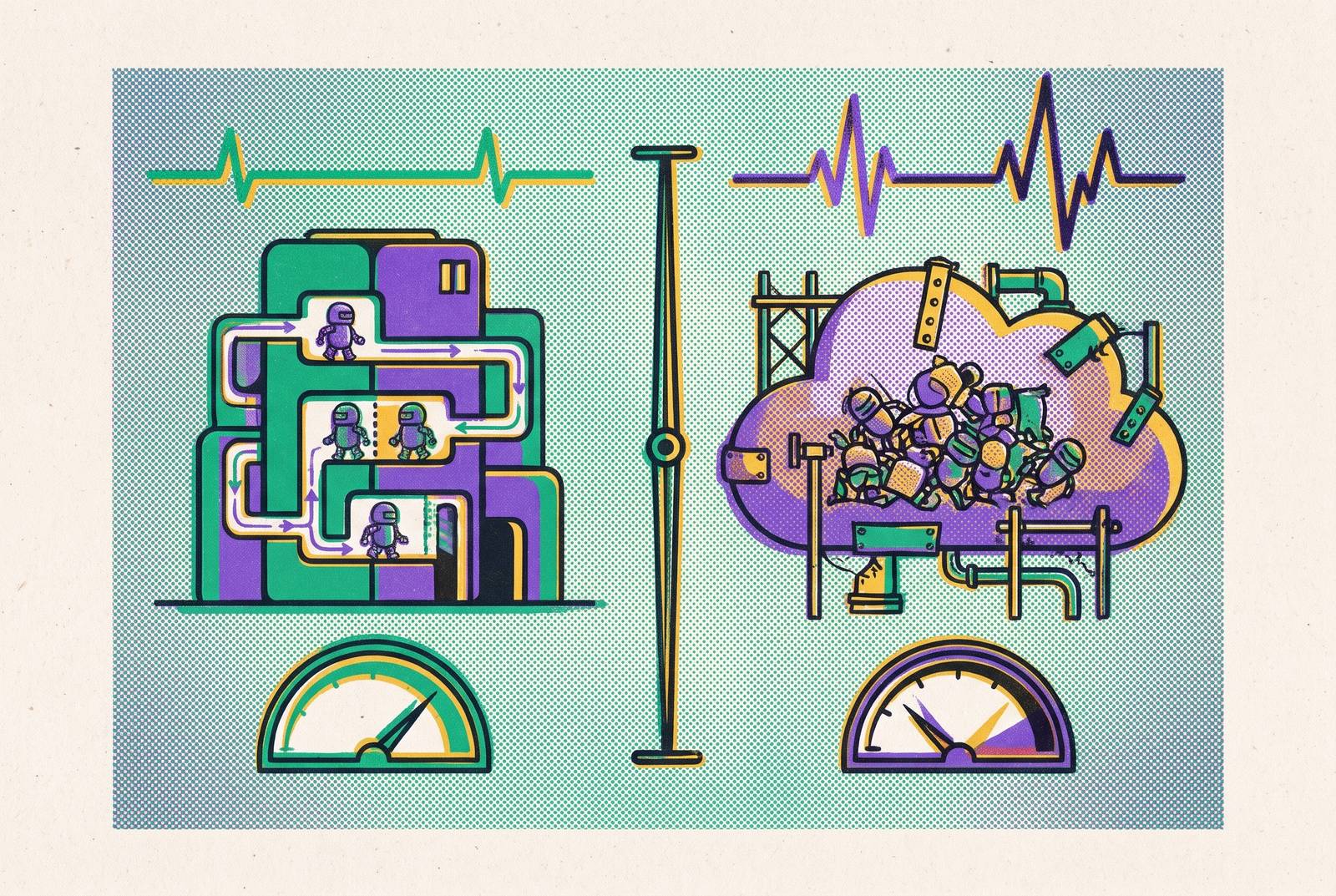
For SaaS products with always-on autonomous agents, purpose-built managed cloud hosting is the stronger fit when it provides continuous operation, per-user isolation, predictable costs, and state-aware recovery. General cloud can provide the compute, but builders must add those guarantees for agents themselves. This comparison uses those four metrics to distinguish managed cloud hosting for AI agents from a general cloud retrofit.
Why general cloud infrastructure was not built for how AI agents actually run
Traditional cloud infrastructure is built for work that has a clear end. A request arrives, a service processes it, and the work ends. Stateless services, serverless functions, and session-based authentication fit that pattern because each request can be treated as a separate event. An agent follows a different pattern. It observes, reasons, and acts through a loop that repeats until the task is complete or a stopping condition is met, while keeping context across sessions that may last minutes, hours, or days.
That difference changes what one completed task demands. A support agent resolving a ticket end-to-end might make a dozen model calls, invoke several tools, retrieve memory, and validate its actions before it finishes. The workload is not just a larger chatbot response. It needs more compute for each outcome, keeps persistent state, has bursts that are hard to predict, is sensitive to response latency, and may need continuous operation. Time to first token can be more important than raw throughput, while the context needed for the next step must survive the current one.
Agents create and change data without a person approving each step, so each step needs authorization, auditing, and policy enforcement. A session-level permission check does not settle every later action. General cloud primitives do not, by themselves, model the agent’s task, memory, or delegated authority across a chain of agents. The mismatch is therefore an architecture problem.
Why most agents fail in production despite working in demos
A demo can show that an agent completes a task without showing that the surrounding system can support it reliably. Production adds ongoing operation, separate customer contexts, tool failures, and handoffs between agents. Model capability is only part of the system. TGVP’s 2026 agent infrastructure report states the distinction bluntly, “Models are good enough. The bottleneck is infrastructure.”
That distinction helps explain why agents are widely adopted but so few are deployed in production. Enterprises invest in agent software without fully accounting for the infrastructure needed to keep it working. Failures can also be hard to spot. An agent may fail without flagging an error, leaving the customer to discover that the expected work was not completed. A running process is therefore weak evidence that a SaaS product is delivering its promised result.
Successful deployments treat evaluation, human escalation, and a measurable weekly definition of success as part of the system from the start. Those practices depend on infrastructure that exposes useful signals rather than hiding task failures behind healthy service status. They also change how hosting should be judged. Having compute available says little about whether an agent will keep its context, respect customer boundaries, or recover unfinished work. Those questions need measurable criteria before deployment.
The four metrics that make the retrofit gap concrete
Persistent uptime tests whether the agent can keep running without a user request to wake it. Per-user isolation tests whether each customer’s state, credentials, and failures stay within their own boundary. Cost predictability tests whether sustained autonomous work has a knowable operating cost. Recovery speed tests whether work can pick up where it stopped once a process restarts. Each targets a distinct production failure mode.
A platform earns its purpose-built claim only when it passes these practical tests, while a general cloud design must allow for the extra systems it needs to pass them. The comparison should happen before a contract or architecture commitment.
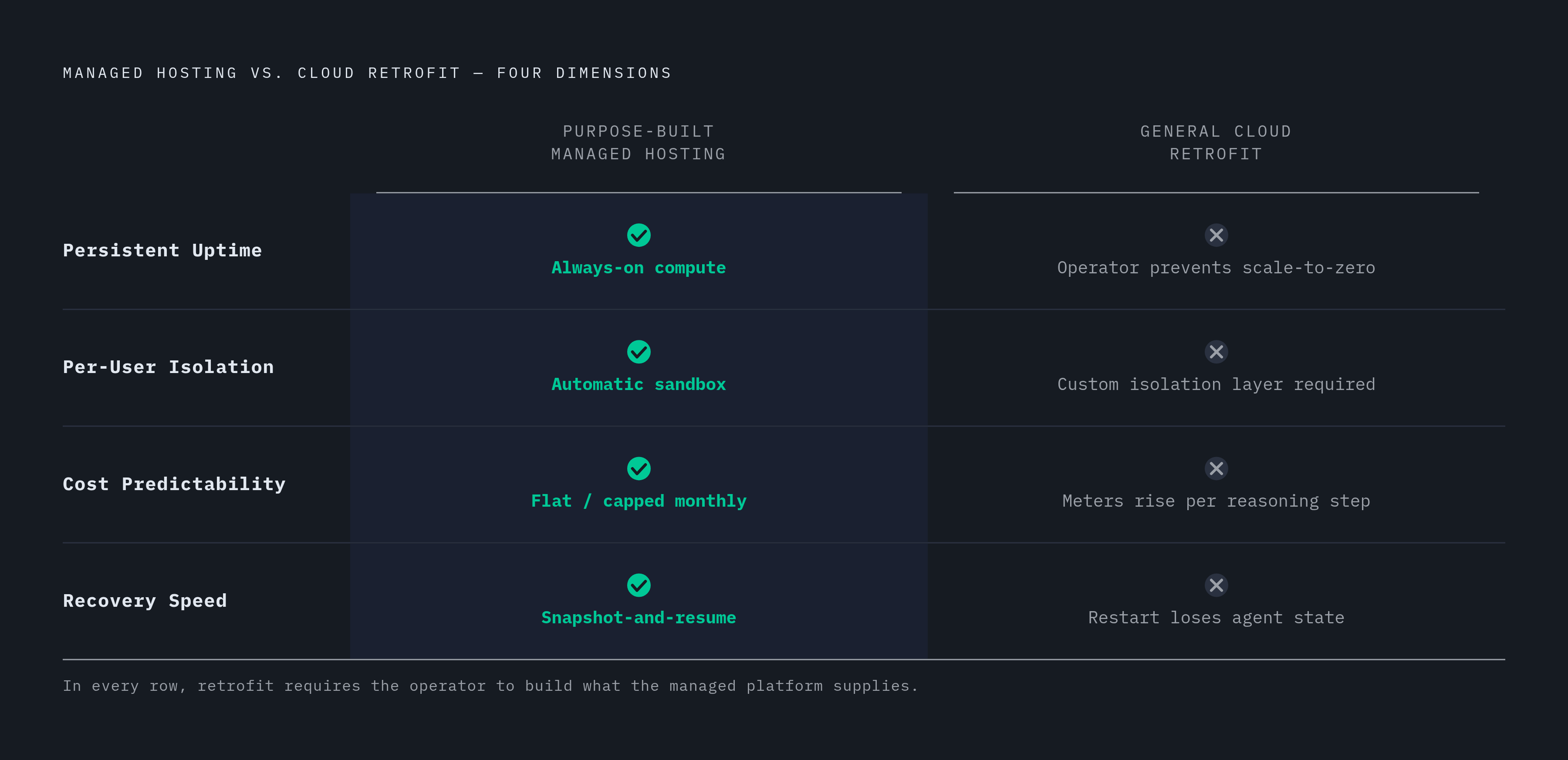
Persistent uptime: why always-on agents expose the idle-instance problem in general cloud
Continuous operation is different from on-demand availability. An on-demand service can wait for a request before it does anything, while an always-on agent may need to monitor events, continue reasoning, or remain reachable between customer interactions. An idle period does not necessarily mean the agent’s job is over. Infrastructure that pauses when things go quiet can stop the agent from working as the product needs it to.
A local machine makes that dependency easy to see. It can sleep, change IP address, lose its home internet connection, or compete with the development environment for resources. The agent inherits every one of those interruptions. Moving it to serverless removes the dependence on that machine, but introduces a different question about availability. When an invocation requires a cold start, the delay can break an agent’s requirement to respond to an incoming event within seconds.
General cloud platforms offer the means to keep compute running, but their scale-down and idle-pause options favor workloads that can stop between bursts. Always-on behavior becomes the operator’s responsibility to arrange and maintain. That responsibility does not end at deployment. Someone must keep the agent available through the quiet periods as well as the busy ones, because both belong to its working day.
Purpose-built hosting meets this need with dedicated, always-on compute in place of a shared pool that scales to zero. Managed assistant clouds also commit to handling uptime, memory, and recovery as part of the service, while raw agent infrastructure leaves those jobs to the operator. A platform that can start an agent on request has not yet shown that it can keep an autonomous agent working.
Per-user isolation: why shared agent infrastructure is a data and reliability liability for SaaS products
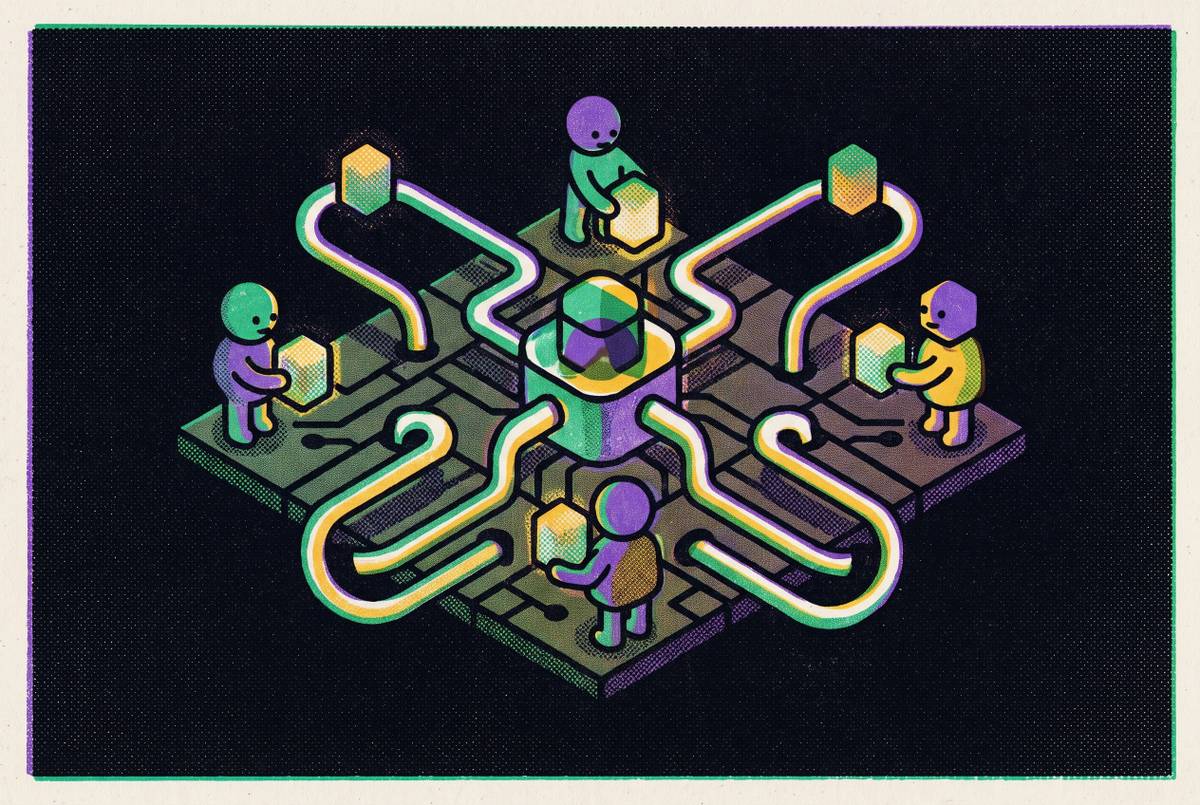
For a SaaS agent product, the unit of scale is one isolated agent context per customer. Adding a customer takes more than sending another user to the same running agent: it needs separate state, scoped credentials, and a boundary around failures. Those boundaries are harder to keep in place when agents share execution. Without them, a product risks both data leakage and reliability coupling, where one customer’s activity affects another’s service.
Multi-tenant designs therefore need boundaries that are enforced at both the database and application layers. Row-level security, per-client billing, and action logs belong in that design from the beginning. Credentials need equally careful scoping. If the whole fleet uses one API key or service account, a downstream system sees the same identity regardless of which customer or agent initiated the call. That creates confused-deputy risk, in which an agent with broad authority can be induced to use it on someone else’s behalf.
General cloud supplies infrastructure on which those controls can be built, but it does not automatically turn a new SaaS signup into a properly isolated agent environment. The operator must build that provisioning and isolation layer. Each custom boundary takes more work to build and adds more to audit. Shared infrastructure cannot safely substitute for those controls merely because it can run many agents at once.
Purpose-built infrastructure treats a persistent per-user sandbox as the deployment unit and creates it automatically at customer onboarding. This makes isolation repeatable rather than dependent on hand-provisioning each signup. The benefit extends beyond data protection. Separate instances can contain a customer’s agent failure or resource spike at that customer’s boundary, instead of allowing it to disrupt neighboring tenants.
Cost predictability: how per-token and per-hour cloud pricing turns agent sophistication into a liability
A simple retrieval agent making a few inference calls per interaction has a relatively manageable metered cost profile. A more capable agent may use many reasoning steps, tool calls, and memory retrievals to produce one result. Each additional step adds consumption. As a consequence, cost grows not only with the number of customers or tasks, but also with the depth of work performed for each task. Better service can become harder to price profitably.
Continuous operation adds a separate source of expense. A chatbot can be busiest during business hours and quiet overnight, while an autonomous workload may run around the clock. Its hourly compute meter does not stop between customer visits. An enterprise cloud setup that is ready for production can also cost more because of availability zones, redundancy, and compliance requirements. Those layers deal with the complexity of distributed systems that many agent workloads would otherwise have no need for.
Managed platforms with flat or usage-capped monthly pricing make it easier to plan what always-on resources will cost. The comparison still needs a clear pricing boundary. A known hosting charge should not be confused with a promise that every model call and downstream service is included. The useful distinction is whether the platform prices continuous operation as a planned resource commitment or leaves the builder exposed to meters that rise with each expansion of the workload.
Building in-house also costs engineering time for compute, language processing, vector databases, security compliance, and ongoing maintenance. Managed hosting saves teams below the crossover scale much of the work of building that infrastructure. General cloud can still win. The crossover is real when scale justifies owning those systems, but it is a later-stage exception rather than the default case for a SaaS builder still establishing the product.
Recovery speed: what happens to an agent mid-task when infrastructure fails
Restarting a stateless service and recovering an agent are different jobs. An agent may have accumulated context, taken actions, and left downstream tool calls in an inconsistent state before the failure. Starting its process again does not reconstruct that situation. The relevant recovery time runs until useful work can resume.
A systemd restart or container health check can bring a process back, but neither inherently knows where an agent was in its reasoning loop. Without state recovery, that restart can amount to task failure. Handoffs between agents make the problem harder because context transfer can break at the boundary between participants. Recovery must account for both the delegated work and the individual process that stopped.
Purpose-built recovery uses snapshot-and-resume semantics to checkpoint agent state and restore a known-good point after failure. State is not the whole problem, however. An agent may already have acted on a downstream system, so restoring context does not by itself undo or resolve those effects.
Compliance adds pressure to make that history visible. The EU AI Act’s Article 50 rules on transparency take effect and enforcement starts in August 2026, while the rules for high-risk AI logging and human oversight apply from December 2027 under the Digital Omnibus. For systems subject to the high-risk requirements, lifecycle logging and oversight reinforce the need to understand what happened before an interruption. A health check alone cannot supply that account.
How to choose managed cloud hosting for AI agents using the four metrics
Before committing, a builder should ask whether the infrastructure keeps the agent running without user-triggered requests, and who takes responsibility when it goes down at 3am. Dedicated always-on hosting answers the operating requirement directly when uptime is part of the managed service. General cloud can support the same goal, but requires the operator to assemble and maintain it. Responsibility is part of the score.
Second, a builder should ask whether each new customer automatically receives an isolated instance with scoped credentials and separate state, or whether someone configures it by hand. Native per-user sandboxes make that boundary part of onboarding. A retrofit needs a custom isolation layer. Third, a builder should ask whether continuous operation has a known monthly cost or whether spending expands with every additional reasoning step and tool call. Flat or capped hosting provides a clearer baseline than open-ended metering, subject to what the price includes.
Fourth, a builder should ask whether failure recovery restores a checkpoint and resumes useful work, or simply starts the task over. A process restart is not an adequate answer. Purpose-built hosting should show that its state-aware recovery works, while general cloud needs an added design for state-management. Across all four questions, the comparison is between capabilities supplied by the platform and capabilities the team must build, operate, and audit itself.
The workload determines the recommendation. Simple retrieval agents whose interactions have a clear end can be a good fit for general cloud, which has widely available compute and a large ecosystem. Always-on SaaS agents with separate customer contexts favor purpose-built managed hosting that passes all four tests. Teams working at a large scale may reach a point where building their own stack is worth the cost. Until then, hand-provisioning, monitoring, and recovering every customer’s agent spends engineering time on infrastructure that could go toward the product customers chose.