Orchestrating Multi-Agent Pipelines on Infrastructure Designed Around Agent Coordination From Day One
Sound agent architecture still fails without durable state, isolation, and tracing.
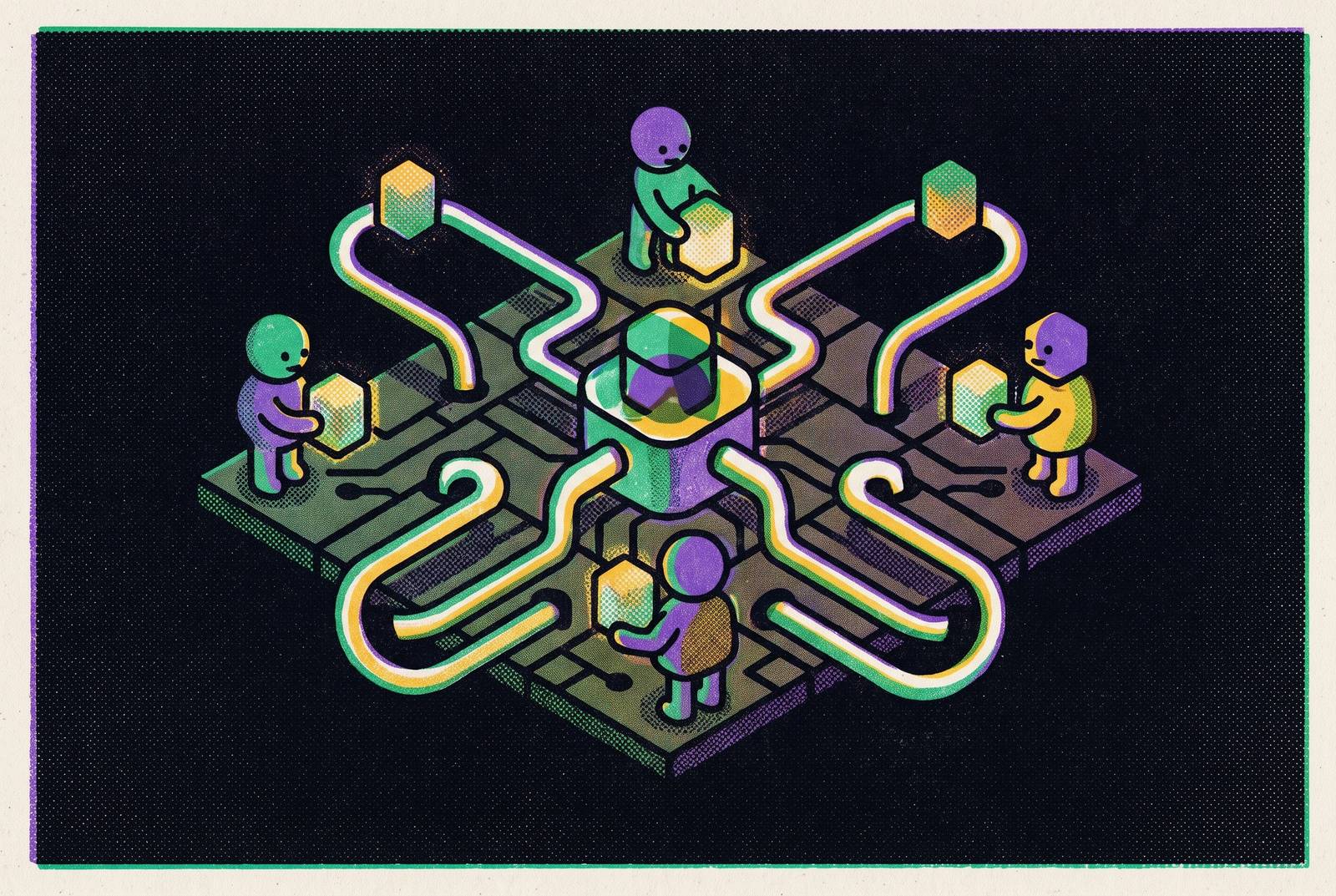
Managed cloud hosting for AI agents should provide durable shared state, isolated execution, recovery across failures, governance, and cross-agent tracing. Multi-agent pipelines fail when their infrastructure cannot sustain coordination, even when their architecture is sound. The right deployment choice starts with those requirements, then matches the runtime to the workload.
Why multi-agent pipelines keep failing in production despite sound architecture
A working multi-agent demo proves that agents can complete a task together. It does not prove that the pipeline can run reliably for every customer. In production, agents must share context across steps, keep it after each session ends, and use the same version as work goes on. A sound orchestration pattern cannot compensate when that context disappears or diverges. The gap is beneath the agent logic.
That failure takes different forms across architectures. In a peer-to-peer pipeline, missing shared records make the full reasoning chain impossible to reconstruct. In a hierarchy, an inconsistent definition at a mid-level supervisor spreads to the workers beneath it.
The SAP/arXiv enterprise orchestration study identifies a further mismatch between discrete request-response mechanisms and continuous business-event streams. A pipeline that handles ongoing events cannot treat each exchange as if it stands on its own. The pipeline still needs context from earlier work as new work comes in.
What the three coordination patterns actually demand from the layer beneath them
In a supervisor/worker pipeline, the supervisor holds authoritative task state and delegates work. That makes it a coordination bottleneck. If it fails without a durable checkpoint, the workflow stalls because the workers alone cannot replace its record of progress. The hosting environment must keep resumable state at that coordination node so it can restart the process with the state it needs to resume work.
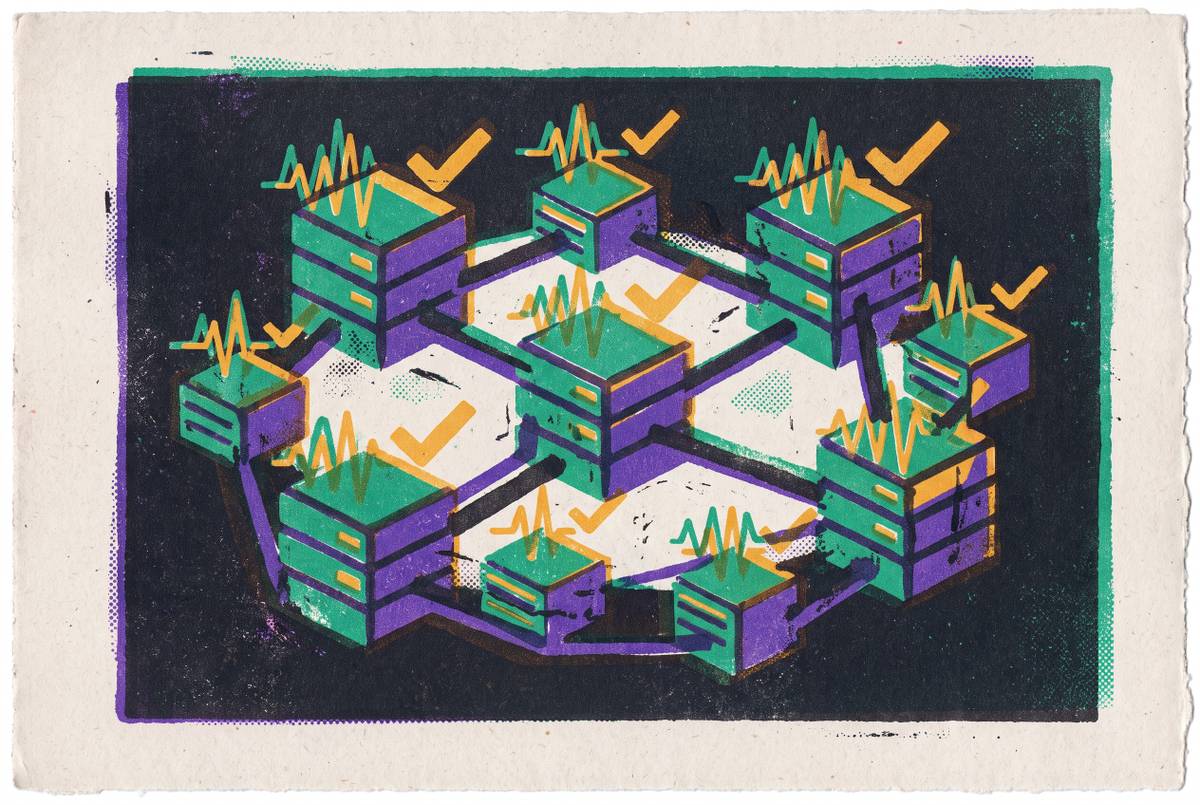
Peer-to-peer coordination distributes the work but removes that central record keeper. No single agent sees every interaction. The infrastructure must give every agent a shared context layer to write to so the pipeline can be audited across agent boundaries. Separate agent histories do not give the full reasoning chain.
Hierarchical coordination also requires supervisors to agree on what key concepts mean. Local memory is not enough here. Mid-level supervisors need a shared context store that gives them the same information so that separate branches do not work from conflicting definitions. The hierarchy needs communication protocols, state management, and governance that work together.
A2A handles agent-to-agent communication, while MCP handles agent-to-tool communication. Neither supplies persistent state or governance on its own. Continuous event streams also require priority inference, related-event merging, and preemption. The SAP study found that a Task Manager reduced high-priority queue latency by 14–75% and improved completeness at large agent registries. Those controlled-simulation results show why event handling belongs in the infrastructure evaluation.
Why most general-purpose infrastructure cannot meet these requirements
General-purpose compute can run an agent process without keeping the coordination state that the process needs. Memory is transient unless a durable store is explicitly provided. Restarting compute does not restore a shared understanding of unfinished work. A VPS or container deployment therefore supplies only part of the system, even when the agent code runs correctly.
Shared execution environments create a separate weakness. Agents sharing a process space can expose one another’s context to a crashed or compromised agent. Orchestration logic does not establish an execution boundary. Likewise, resuming a workflow from its interrupted step requires checkpointing beyond what a general compute deployment provides by itself.
These gaps make self-hosting a substantial multi-quarter engineering project. Durable state, isolation, observability, and orchestration migration draw on platform engineering, ML engineering, observability engineering, and security engineering. The work continues after the initial launch because those systems must be maintained as pipelines and customer counts grow. The mistake is not choosing general-purpose infrastructure, but treating its missing coordination layers as negligible setup work.
The five infrastructure properties that multi-agent coordination actually requires from day one
Durable shared state must outlive individual agent sessions, survive node failures, and present a consistent view to agents reading it simultaneously. This addresses the context divergence that breaks both peer networks and hierarchies. Persistence alone is not the whole requirement. A collection of durable but conflicting memories still leaves supervisors and workers acting on different information.
Per-agent execution isolation must stop one agent from corrupting another’s context, credentials, or execution state. Each agent also needs its own identity, because shared accounts defeat traceability and controlled access. For untrusted or model-generated code, microVMs are the production-standard isolation unit in 2026. The design principle is to keep the agent loop outside the sandbox and invoke the sandbox as a tool.
Coordination continuity means resuming from the exact interrupted step. That requires checkpointing at the orchestration layer. Model-level recovery cannot replace a record of which pipeline work is done and which is unfinished. For continuous event streams, the Task Manager functions described in the SAP study add priority handling, event merging, and preemption to that recovery foundation.
Governance must constrain actions regardless of what the model decides. Permission boundaries, validation logic, and deterministic fallback paths must be built into the system and kept out of the instructions that the agent can interpret. OWASP Agentic Top 10 classifies Agent Goal Hijack (ASI01) as a named threat, so the governance layer must treat agent judgment as potentially hostile. Microsoft’s open-source Agent Governance Toolkit, released April 2026, provides automated governance verification and compliance grading mapped to the EU AI Act, NIST AI RMF, HIPAA, and SOC 2. Its separate evidence collection covers all ten OWASP Agentic AI Top 10 risk categories.
Agent-native observability must track a task as it moves from one agent to another. A healthy process can still be part of a broken workflow. Standard APM focused on individual processes cannot provide the full view of non-deterministic agent flows. In peer-to-peer systems, cross-agent tracing is essential to reconstructing the reasoning chain after a failure. Without it, the operator can see activity without being able to explain the outcome.
What the leading orchestration frameworks provide and where they stop
LangGraph provides thread-level checkpointing and PostgresSaver for persistent workflow state. Long-running production workflows still require engineering beyond those components. LangSmith Agent Server, renamed from LangSmith Deployment in November 2026, supplies the managed service layer for running LangGraph agents at scale. It is available in Plus and Enterprise plans, with fully managed Cloud hosting and a Hybrid mode where no data leaves the customer’s VPC.
CrewAI suits workflows that mirror familiar business roles. It supports sequential and hierarchical execution through a manager-delegates-to-specialists model, with flow state and per-agent memory. That makes the coordination structure easy to map onto an existing business process. It does not make the framework itself a complete answer to execution isolation, compliance controls, or customer provisioning.
AWS Bedrock AgentCore reached general availability in October 2025 and provides platform-managed state, observability through AWS CloudWatch, and agnostic model support. AWS points customers toward this runtime as it winds down legacy Bedrock Agents “Classic,” which closed to new customers on July 30, 2026. AgentCore therefore addresses runtime concerns as well as coordination needs. It still needs evaluation against the full set of production requirements.
These options sit at different points in the stack. Checkpointing, delegation logic, and managed runtime services are useful, but none removes the need to account for domain logic, full compliance-mapped governance, and per-user isolation. The deployment decision belongs at that boundary. A framework’s ability to coordinate agents is not evidence that every surrounding operational requirement has been met.
How the integration layer fits into a coordination-first infrastructure design
Once agents act in external SaaS systems, authentication becomes a practical deployment obstacle. Each agent must present the right user’s credentials. Agents that run in parallel may need different OAuth contexts, while developers need a way to work without handling each token. This is a distinct infrastructure concern from shared state or execution isolation, even though a failure here can interrupt the whole pipeline.
Composio addresses this through managed authentication using “connected accounts.” Its catalogue listed 1,089 toolkits as of August 2026, exposing more than 20,000 individual tools through a single MCP endpoint. The platform holds SOC 2 Type II attestation and ISO 27001:2022 certification. Shared Connections, introduced September 2026, makes a company account available across a team without passing credentials around. These capabilities reduce authentication plumbing without replacing the coordination layer.
Managed integration still needs a fallback design. Composio reported roughly 36 hours of webhook trigger unavailability in April 2026, caused by an uncontrolled trigger-processing table backlog. For event-driven pipelines, that incident illustrates why trigger paths need fallback handling even when authentication and tool access are managed.
MCP and A2A serve complementary roles here. MCP handles tool connections, while A2A handles communication between agents, and neither substitutes for controls over tool use. The toolkit’s MCP security gateway addresses tool misuse as part of the governance layer. Connecting an agent to a tool and constraining what it does with that tool remain separate responsibilities.
What per-user isolation means when every customer needs their own agent pipeline
For an agent-powered product, the five infrastructure requirements apply to every customer. Each customer needs separate persistent state, an execution environment, and an identity. When customer pipelines share coordination state, security, audit, and reliability all fail at once. The customer boundary becomes the unit of scale.
Per-agent isolation must work within that customer boundary. For untrusted code, the production pattern is microVM-per-agent, with microVM isolation providing hardware-grade separation without the overhead of full VMs. Coordination state remains inside each user’s boundary.
A SaaS operator that gives every customer a branded agent is running multi-tenant, multi-agent infrastructure. Provisioning an environment, configuring its state store, wiring integrations, and applying governance manually for each customer turns growth into repeated infrastructure work. The appropriate design is automatic provisioning at onboarding, triggered by a single API call. Each customer gets a private, persistent, branded agent without the operator having to rebuild the deployment by hand.
Which managed cloud hosting for AI agents fits the deployment decision?
The build-versus-buy decision starts with a direct question. Which coordination properties is the team prepared to engineer, maintain, and scale itself? Domain logic is the layer where building is consistently justified because it contains the product’s business rules and proprietary decisions. The other layers have managed alternatives that ship faster. Self-hosting remains an option, but its cost floor is specialized engineering labor.
For LangGraph workloads, LangSmith Agent Server is the managed hosting option to evaluate, with Cloud and Hybrid deployment choices. For AWS-centered deployments needing managed state, CloudWatch observability, and agnostic model support, AgentCore is the runtime to evaluate. For role-based business workflows, CrewAI fits the coordination layer but still needs a hosting decision. For SaaS-action workloads, Composio or an equivalent managed integration layer addresses authentication, leaving the runtime as a separate requirement.
For most teams, the production default is hybrid. An open-source framework such as LangGraph, CrewAI, or Microsoft Agent Framework handles coordination logic, managed infrastructure supplies state, isolation, and governance, and a managed integration layer handles authentication. Before choosing the runtime, the team should ask whether it has durable shared state that agents can share across agent boundaries. It should also ask whether it can provision a fully isolated, fully wired agent instance per customer without manual configuration. A service that merely packages compute leaves those questions unanswered.
Stripe let software companies take payments without having to become payments companies. Agent infrastructure calls for the same separation. The founder’s real cost is the weeks that provisioning, monitoring, and recovery take away from building the product customers came to buy.