Per-User Agent Cost Breakdown for SaaS Pricing
AI agents break traditional per-seat SaaS pricing models.

Advertisement
A seat-based price assumes a human logs in and does the work. An AI agent never logs in at all. It runs on its own, which separates the value a product delivers from the number of people using it. That shift in how value separates from user count changes the economics underneath a huge share of SaaS pricing, and most founders haven't rebuilt their models to match it.
The pricing model chosen at launch ends up shaping the entire cost curve, often more than the underlying technology stack does. A founder who prices an agent product the way they'd price a dashboard tool will underprice early customers and then get squeezed on margin once usage climbs. The number on the price page was never the problem; the structure behind it was.
The five cost layers that determine what one user's agent costs to run
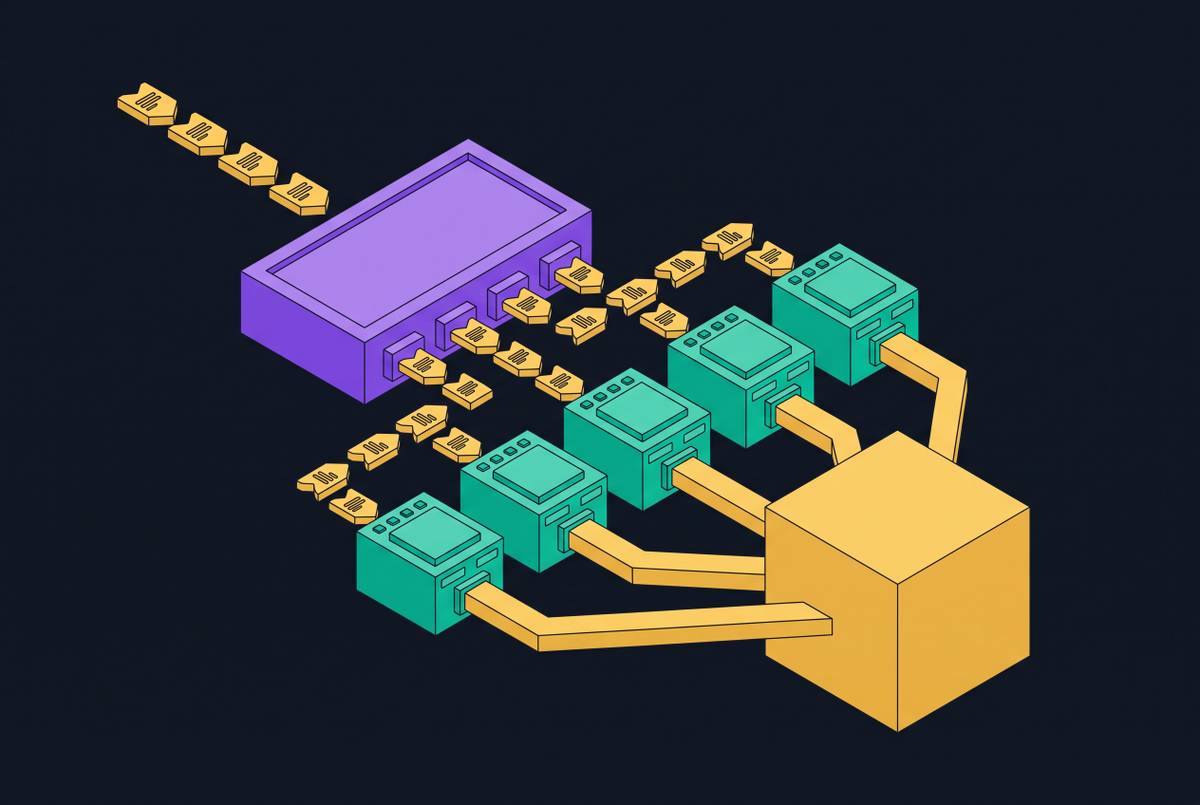
You can't look up per-user agent cost as one figure and budget against it. It's the sum of at least five layers: LLM inference, orchestration runtime, storage and retrieval infrastructure, integrations, and monitoring. Each one scales on its own schedule, for its own reasons, and none of them move in lockstep with user count the way a per-seat SaaS cost usually does.
Three real production snapshots show how wide that range gets. An early-stage startup running on LLM APIs and basic hosting pays a low monthly total, typically well under a few hundred dollars. A Series A fintech running a research and analysis agent on Claude 3.5 Sonnet, AWS ECS, LangSmith Plus, Pinecone, and Upstash costs in the low thousands a month. An enterprise deployment built on AutoGen and LangGraph, running GPT-4 Turbo (a model being retired, with shutdown set for October 23, 2026) on AWS EKS, Datadog, and Weaviate Enterprise, reaches into the tens of thousands monthly.
That spread isn't just a story about how many users each company has. It reflects which of the three real production snapshots' layers actually got built, how carefully they were architected, and whether monitoring and retrieval infrastructure were treated as real budget lines or afterthoughts. Technova Partners' 2026 analysis of three-year total cost of ownership found that operational costs make up 65 to 75% of total spend over that period, so they far outweigh the initial build. The stack a team designs at launch is, in practice, the cost structure it will be living with for years. The next three sections take apart the layers that cause the most damage when founders get them wrong: inference, the trio of RAG infrastructure, orchestration, and monitoring, and integrations.
LLM inference costs are predictable and controllable, but only if you engineer them that way
Inference is the layer every founder sees first because it appears as a line on the API bill every month. For most mid-sized deployments it isn't actually the biggest cost, but it's the one that compounds fastest when an agent is built carelessly, which makes prompt discipline and model routing the highest-leverage levers a team has for controlling cost.
A real production case makes the math concrete. A RAG agent serving 50 active users, running on GPT-4o, runs about $330 a month in inference costs. That manageable monthly number doubles or triples the moment the agent starts injecting long, unfiltered chunks of retrieved text, skips compressing conversation history before sending it back to the model, or chains together API calls it didn't need to make. None of that is a pricing decision; it is an engineering decision that determines pricing outcomes six months later.
Self-hosting looks like an obvious way around API costs, and for most companies it's the expensive path instead. Renting an H100 for continuous self-hosted inference costs far more per month than managed API access at mid-scale usage. Self-hosting only wins the trade-off at very high, sustained volume, where the fixed cost of the hardware finally gets spread thin enough to beat the per-call price of an API.
Founders sometimes assume that fine-tuning a smaller open-source model will cut inference costs down to near zero. In practice, fine-tuning, retraining, and the MLOps work needed to keep a custom model running in production are their own major cost lines, and the savings on inference often get eaten right back up by the engineering overhead required to maintain that model. Inference cost is governed by how an agent is built.
The layers founders consistently under-budget: RAG infrastructure, orchestration, and monitoring
Most teams estimate an agent's cost by adding up the API calls and stopping there. The layers that blow agent budgets are not the ones founders price; they are the RAG pipeline, the orchestration runtime, and the monitoring stack, each invisible in early prototypes and each real in production. All three are invisible in an early prototype, because a prototype doesn't need to retrieve documents at scale, coordinate multi-step agent workflows under load, or track failures across hundreds of concurrent sessions. Production does.
The same production case breaks these invisible layers down into real numbers. The vector database, Pinecone Serverless holding tens of thousands of stored vectors, runs in the low tens of dollars a month, a cost that's stable and predictable and only grows as the document base itself grows. If you pair a lightweight cloud backend with a PostgreSQL instance for session data, application infrastructure costs somewhere from the low tens to the low hundreds of dollars a month. Monitoring and observability, running on the Langfuse Cloud Pro tier, costs $199 a month flat, with unlimited users and no per-seat charge.
Orchestration runtime adds a separate, recurring cost on top of all of this, one that most budget guides undercount entirely because they treat the LLM API bill as the whole picture. Teams looking to cut the monitoring line by self-hosting an open-source tool like Langfuse instead of paying for the cloud tier do remove the licensing fee, but they take on the infrastructure needed to run it and the time needed to set it up. That's a shift in where the cost sits.
Set aside a meaningful share of the initial build budget as annual run cost for the first 18 months, since these layers don't settle into a predictable pattern until actual production usage reveals what the agent really needs to do.
Integrations are a recurring cost driver, not a one-time build expense
Integration work gets budgeted like a project: build the connector once, ship it, move on. That's not how the cost behaves in production. The more business systems an agent touches, the more it costs on an ongoing basis, in API rate limits, in authentication that needs upkeep, and in per-call fees, and for a product priced per user, that cost multiplies with every new customer who comes on board.
Connecting an agent to CRMs, ERPs, and other enterprise systems is consistently named as one of the largest cost drivers in agent development, and the reason isn't that the integration itself is hard to build. Each connected system becomes a dependency that has to be maintained, updated, and kept secure, separately, across every single user's agent instance. A connector built once still has to be operated forever, for every customer who relies on it.
Composio published its pricing before August 15, 2026, and it shows what that operating cost looks like at different volumes. The free tier covers 20,000 tool calls a month. The $29-a-month tier covers 200,000 calls, with additional calls billed at $0.299 per 1,000. The $229-a-month tier covers 2 million calls, with additional calls priced at $0.249 per 1,000. Enterprise pricing is custom. The structure makes one thing obvious: call volume, not seat count, is what drives this bill upward.
The emergence of standards like the MCP Gateway changes the shape of this problem somewhat. It gives an agent a single, standardized endpoint that works across Claude, Cursor, OpenAI Codex, and other frameworks, so the integration layer becomes a cost that's predictable and shared across agent types rather than rebuilt separately for every tool an agent needs to reach. That doesn't make integration free. It makes the cost easier to forecast.
The pricing implication follows directly from how Composio's tiers are structured: at high user counts, tool-call volume scales with the number of users, not with the number of seats sold. A founder pricing on seats while paying per tool call will watch integration costs grow faster than revenue as the user base expands, because the two scale on entirely different curves.
How the cost stack compounds across four pricing models
What changes is who absorbs the risk when usage goes up. That makes the choice of pricing model a cost architecture decision in its own right, not just a go-to-market one.
Most SaaS companies default to per-seat subscription because they inherit it from their pre-agent products. Per-seat subscription remains the SaaS default. It gives predictable revenue, but inference and tool-call costs vary enormously depending on how actively each user actually engages their agent, to the point that one high-usage seat can cost as much to serve as three low-usage seats put together. The risk here is structural: an unthrottled agent can run up costs that quietly erase the margin on a flat seat fee.
Per-resolution or outcome-based pricing lines up incentives differently. The vendor only gets paid when the agent actually resolves something, which aligns what the vendor wants with what the buyer wants, but it means the vendor absorbs the full infrastructure cost on every attempt that fails or only partially resolves. Published per-resolution rates across vendors range widely, from under a dollar to around two dollars per resolution.
Usage-based or per-action pricing puts consumption risk directly on the buyer. Revenue becomes less predictable for the vendor, but heavy users stop compressing anyone's margin, because their usage is what they're paying for. GitHub shifted Copilot onto usage-based billing tied directly to token consumption, and that move is a visible example of a major vendor making this exact trade. The risk runs the other direction for builders here: an unthrottled agent can rack up very high daily costs for a single customer, which makes usage caps a required feature of the product.
Hybrid pricing, a fixed platform fee layered with variable consumption charges, is where the market is converging in 2026, because it separates the fixed cost of standing up the product from the variable cost of actually running it, and that split matches how the underlying cost stack actually behaves. Even companies with deep resources are still working out how to structure that split. Salesforce shipped three different pricing models for Agentforce in roughly 18 months, which says something about how hard this problem is even for a company with Salesforce's scale and data. HighRadius pushed furthest in this direction at its February 2026 Radiance conference, announcing zero implementation fees, zero subscription cost until a customer goes live, and a structure where customers only pay once they've achieved measurable savings, priced as a percentage of those savings. That model ties the vendor's revenue directly to the value delivered, and it only works if the vendor has already built enough cost discipline into the five layers above to survive the gap between delivery and payment.
How the managed-versus-self-hosted decision restructures the entire cost stack
Self-hosting agent infrastructure looks like the cheaper option on paper, and for most SaaS founders it isn't. Building and running infrastructure in-house trades one cost for a different, compounding one: GPU capital spending, the ongoing work of MLOps, and the engineering effort of handling an agent's probabilistic failure modes, all in exchange for a level of control that most products at early and mid scale simply don't need yet.
Managed or white-label delivery sits at the other end of that trade. It gets a product to production in 2 to 4 weeks, with upfront infrastructure cost that's effectively zero to low, and it splits the compliance burden with the platform partner instead of carrying it alone. For a founder still working out which pricing model fits their product and which of the five cost layers is going to be the one that surprises them, that speed and shared risk matters more than the theoretical savings of owning every layer from day one.
The decision is about which operational cost a company is prepared to take on, and whether the control that comes with self-hosting is worth the GPU spend, the MLOps staffing, and the failure-handling work it demands. For most companies building an agent product today, that control is a cost paid for a capability the business doesn't yet have the scale to use.